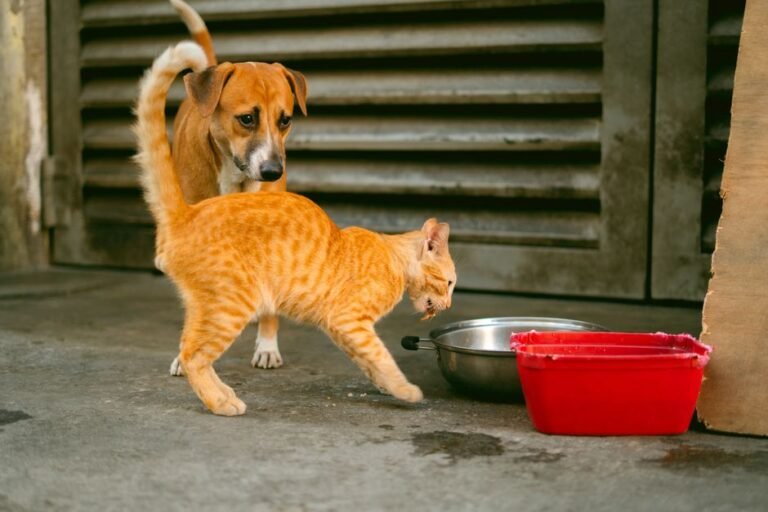
How to Stop Your Dog From Eating the Cat’s Food (What Actually Works)
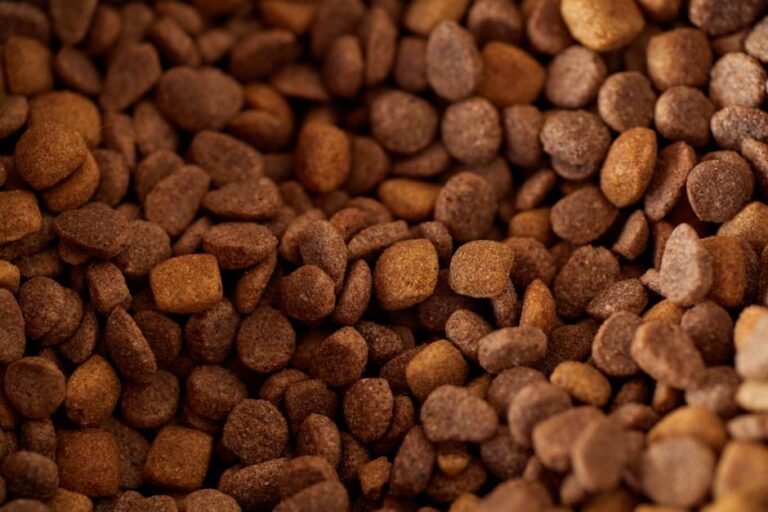
Cat food is basically candy to a dog. Here’s how to keep it that way — only for the cat.
The fastest fix is physical separation: feed your cat somewhere your dog genuinely can’t reach — a baby-gated room, an elevated surface, or a microchip feeder that only opens for her — and stick to set meal times so food isn’t sitting out between meals for your dog to find.
Key takeaways
- ✓Cat food is higher in protein and fat than dog food, and eating it regularly can cause weight gain, digestive upset, or pancreatitis in dogs.
- ✓Physical separation — a gate, a room, height, or a microchip feeder — solves this faster and more reliably than training alone.
- ✓Free-feeding (leaving food out all day) is the single biggest reason dogs end up in the cat bowl.
- ✓A cat that keeps losing meals to the dog will often eat less overall, or start guarding food, so this isn’t just a dog problem.
Why this happens — and why it’s worth fixing properly
Dogs are opportunistic eaters, and cat food is designed to be highly palatable and calorie-dense, which makes it genuinely tempting even for a dog that’s already been fed. It isn’t a training failure on your part; it’s just what dogs do when unattended food is within reach.
The bigger issue is what happens next. Cat food’s higher protein and fat content can cause an upset stomach in dogs, and repeated overeating can contribute to weight gain or, in more serious cases, pancreatitis. On the other side, a cat who keeps losing her meals to a faster, bigger animal may start eating too quickly, eating too little, or avoiding the food area altogether — none of which is good for her long-term health or stress levels.
The good news: this is one of the most fixable problems in a mixed-pet home, and it rarely takes more than one or two of the changes below.
Physical separation: the most reliable fix
Training helps, but a physical barrier removes the temptation entirely — which is a lot more reliable than asking a hungry dog to exercise restraint.
- A baby gate between rooms. Feed your cat in a separate room and gate the doorway during and after mealtimes, until she’s finished and you’ve picked up the bowl.
- Height. Cats are natural climbers; most dogs aren’t. A feeding station on a counter, washing machine, or a dedicated shelf around waist height keeps food out of reach for all but the most athletic (or tallest) dogs.
- A cat door. Cut to your cat’s size and fitted into a door or an interior gate, this gives her a private feeding room a dog physically cannot follow her into.
- A microchip feeder. These feeders read your cat’s microchip (or a collar tag) and only unlock for her, which solves the problem even in a single shared room. Worth it if separate rooms or gates aren’t practical in your layout — see our Smart Pet Tech guide for how these fit into a multi-pet home.
Fix the schedule, not just the space
Free-feeding — leaving a full bowl out all day — is the single biggest reason a dog ends up in the cat bowl, because there’s simply more opportunity for it to happen. Moving to set meal times closes most of that window on its own.
- Feed both pets at the same time, in different rooms, so neither is finished (and looking for more) while the other is still eating.
- If timing both at once isn’t practical, feed the dog first and take him out of the room before you put the cat’s bowl down.
- Pick up any leftover food after 20–30 minutes rather than leaving it out — this also helps you notice if your cat’s appetite changes, which is useful information on its own.
Teaching “leave it” as a backup, not a first line of defence
Physical separation should do most of the work, but a solid “leave it” cue is a useful backup for moments the setup isn’t perfect — a dropped piece of kibble, a door left open. Keep it simple: reward your dog generously every time he chooses to look away from the cat’s bowl on command, and practise with the bowl empty before ever testing it with food actually in reach.
What if it’s the other way around — the cat is stealing the dog’s food?
Less common, since dog food usually isn’t as tempting to cats, but it does happen, especially with wet food. Dog food isn’t nutritionally complete for cats long-term (it’s too low in protein, taurine, and certain vitamins cats need), so the same separation principles apply: feed on a schedule, and give your cat her own space to eat undisturbed.
Frequently asked questions
Is it actually dangerous if my dog eats cat food occasionally?
A single small amount is unlikely to cause serious harm, but it can trigger an upset stomach, and regular access increases the risk of weight gain and pancreatitis over time. It’s worth fixing even if nothing’s gone wrong yet.
Will a microchip feeder work if I have more than one cat?
Most microchip feeders can be programmed to recognise multiple registered pets, so yes — but check the specific model’s pet limit before buying if you have three or more animals sharing a home.
My dog just waits by the cat’s bowl even when he can’t reach it. Is that a problem?
Not on its own, though it’s worth managing if it’s stressing your cat out. A baby gate or closed door (rather than just an elevated bowl he can watch and wait under) usually resolves this faster.
How long does it take for a dog to stop trying?
Most dogs stop actively trying within a couple of weeks once the food is consistently unreachable — dogs generally stop investing effort in something that never pays off.
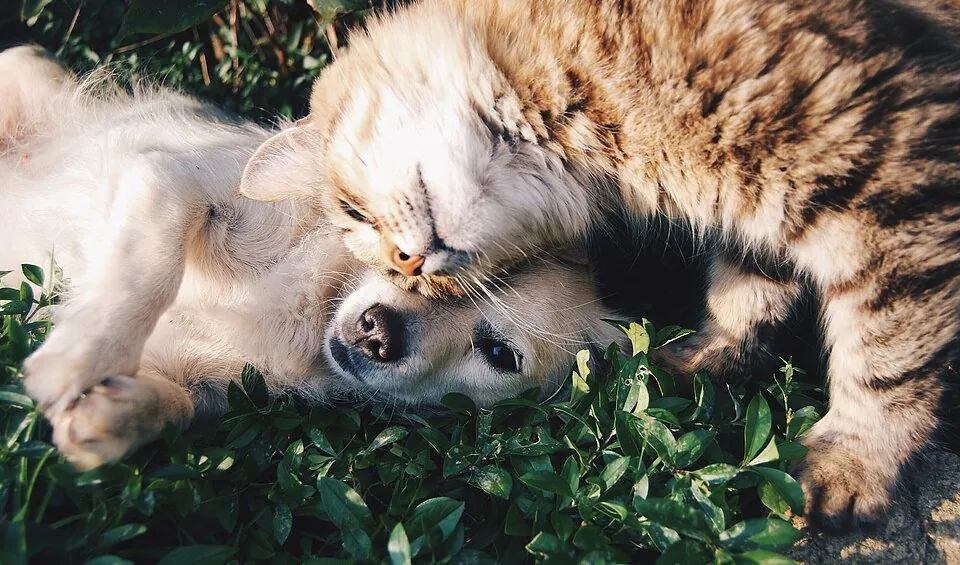
Feeding is just one piece of a calmer mixed-pet home.
Sources and further reading
Diets and feeding plans must account for each animal’s nutritional needs. See WSAVA global nutrition guidelines.
The physical environment and opportunities for natural behaviour matter for cat welfare. See FelineVMA: meeting the needs of indoor cats.
These references provide background for the guidance above; they do not establish product testing or endorsement of a particular home layout. For individual health concerns, ask your veterinarian.

Better homes for cats, dogs, and the people who love both.