How to Set Up a Shared Living Room for a Cat and a Dog
Give your cat height, give your dog a base, and the same room works for both.
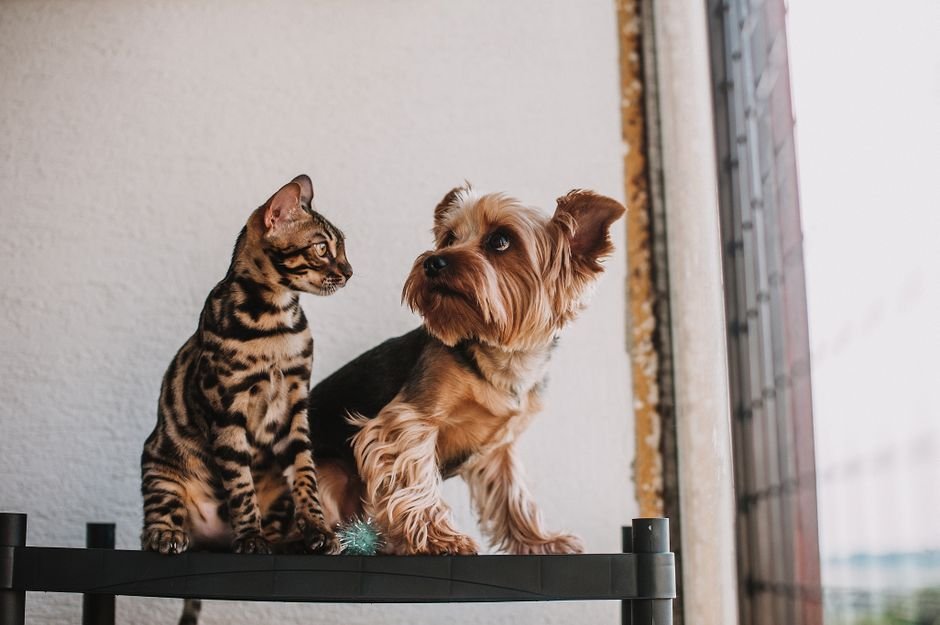
Give your cat vertical territory — shelves, a cat tree, or a window perch she can reach without touching the floor — and give your dog his own settled base at ground level. Layered this way, neither pet has to compete for the same physical space in the room.
Key takeaways
- ✓Cats feel safer with height and an escape route; dogs are content with a defined base at floor level.
- ✓A ‘cat highway’ of shelves at different heights lets a cat cross a room without ever coming down.
- ✓Every vertical route works best with two access points — a low step-on and a higher step-off — so your cat is never cornered.
- ✓Gates and barriers aren’t a failure of the setup — they’re a normal, permanent part of a shared room that works.
Why a shared room isn’t really “shared” evenly
A cat and a dog experience the same room completely differently. A dog mostly thinks in terms of a single base — a bed, a corner, a favourite spot on the floor. A cat thinks in three dimensions, and having no access to height in a room a dog also uses is one of the more common reasons cats end up avoiding shared spaces altogether.
The fix isn’t dividing the room in half. It’s layering it — floor-level territory for the dog, vertical territory for the cat — so both animals have a place that’s genuinely theirs within the same square footage.
Building a vertical route for your cat
A basic “cat highway” needs a minimum of three shelves: a low step-on point, a mid-level transition, and a high resting platform. Along one wall of your living room, this can run floor to ceiling; elsewhere, even two or three well-placed shelves near a window make a real difference.
- Every route needs two ways in and out — one from the floor, one from adjacent furniture — so your cat is never trapped if the dog approaches.
- Platforms should be large enough for your cat to turn around and lie down comfortably, not just perch — a shelf that’s too narrow won’t get used.
- Anchor everything into a wall stud, not just plasterboard; a wobbly shelf undermines the sense of safety the whole setup is meant to provide.
- A window perch at the top of the route gives your cat a reason to use it daily, not just when the dog is nearby.
Giving your dog his own base
Dogs need a retreat too, just a simpler one: a bed or crate in a corner that’s consistently his, away from the busiest foot traffic in the room. A settled, well-defined base reduces the restless wandering that can make a cat feel like there’s nowhere safe to come down to.
Gates and layout, used properly
Physical barriers aren’t a sign the setup has failed — in most mixed-pet homes, some combination of gates, cat doors, or furniture placement is a permanent part of how the room works long-term, not a temporary training tool. Position furniture to create a natural path around the room rather than a single wide-open floor, which also gives a nervous cat more edges and corners to move along instead of crossing open ground.
Frequently asked questions
My cat won’t use the shelves I’ve set up. What’s wrong?
Usually stability or size — a shelf that wobbles, or one too narrow to lie down on, won’t get used. Try treats or a favourite toy at the base to encourage the first few climbs.
Do I need shelves in every room, or just one?
Start with the room your cat and dog share most — typically the living room — and expand from there if it works well.
Is a cat tree enough, or do I need wall shelves too?
A good cat tree can work alone in a smaller room, but wall shelves give a wider route and don’t take up floor space your dog also needs.
Litter placement is part of the same shared-space puzzle.
Sources and further reading
The physical environment and opportunities for natural behaviour matter for cat welfare. See FelineVMA: meeting the needs of indoor cats.
Diets and feeding plans must account for each animal’s nutritional needs. See WSAVA global nutrition guidelines.
These references provide background for the guidance above; they do not establish product testing or endorsement of a particular home layout. For individual health concerns, ask your veterinarian.

Better homes for cats, dogs, and the people who love both.