Where to Place the Purifier So It Actually Works on Both Particulate Types
Most purifier advice assumes one particulate source, so it just says “put it in the room.” With a litter box and a dog’s favorite floor spot in the same space, placement is what determines whether the unit is doing real work or just moving air around.
Keep the unit a few feet from the litter box, not directly in its exhaust path — a fresh clump of litter dust hitting the filter at close range clogs it far faster than ambient dust settling in from across the room. At the same time, position it where it can pull air from your dog’s usual resting spots, since dander sheds continuously wherever your dog naps, not just near the box. An open spot with airflow on multiple sides works better than a corner or a spot tucked behind furniture, for the same reason most manufacturers recommend keeping any purifier away from walls. If the litter box itself needs a location change to make this work, this guide to litter box placement with a dog in the house covers the trade-offs.
Is a HEPA Purifier Enough, or Do You Need to Change the Litter Too?
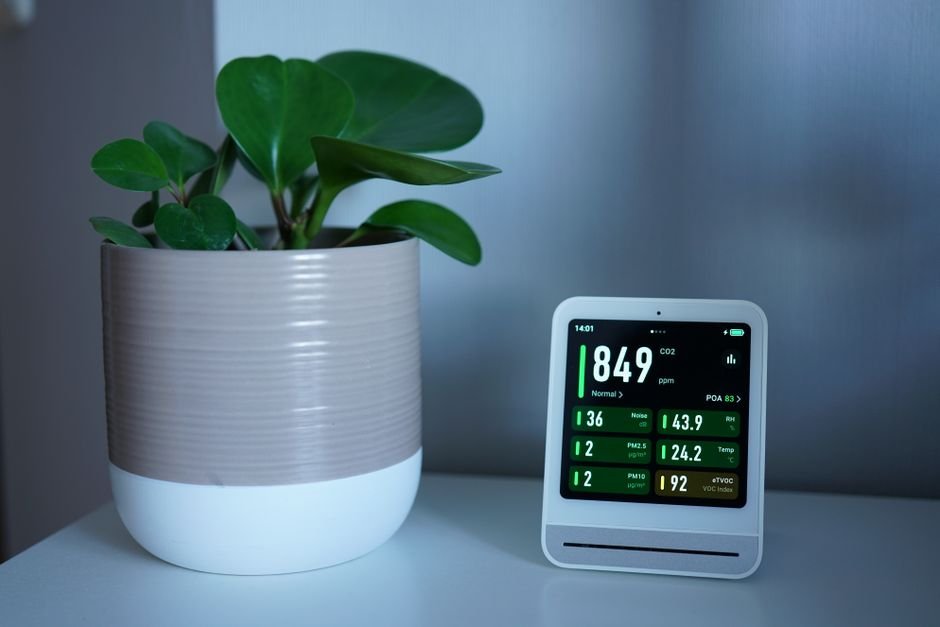
A true HEPA filter — one independently rated to capture at least 99.97% of particles at 0.3 microns — handles both litter dust and dog dander mechanically, which is why it’s the safer default over ionizing or ozone-generating units. Ozone-generating “purifiers” are flagged by environmental health agencies as an indoor air contaminant in their own right, which defeats the purpose in a home already dealing with two particulate sources.
HEPA filtration alone won’t fully solve odour, though — it captures particles, not the smaller molecules that carry smell. Pair a true-HEPA unit with one that also has an activated carbon layer if odour is as much of a concern as dust. And filtration only handles what’s already airborne: switching to a lower-dust litter cuts the problem at the source instead of relying entirely on the purifier to catch up. This litter safety and odour comparison is a useful next stop if you’re considering a switch.
How Often You Should Actually Be Changing Filters With Two Pets
Manufacturer filter-change intervals are usually built around a single-pet or no-pet household — often somewhere in the 6-to-12-month range. Two compounding particulate sources shortens that considerably, and going by the calendar alone will leave you running a partially clogged filter for weeks without realizing it.
A simpler approach: check the filter monthly regardless of what the indicator light says. If it looks visibly grey or feels stiff with buildup rather than soft, replace it — don’t wait for the light. The same logic applies to your home’s HVAC filter, which is quietly doing the same job at a larger scale; keeping the whole home clean with both a cat and a dog covers the broader routine this fits into.
Your Weekly Two-Pet Air Quality Routine
- Scoop the litter box daily, and shorten the full litter-change cycle compared to a single-cat home.
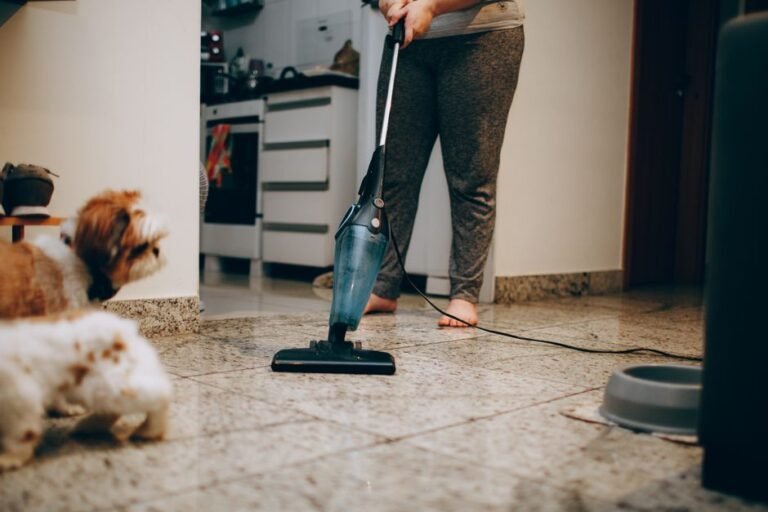
- Vacuum or wipe down your dog’s favorite floor spots and resting areas at least twice a week.
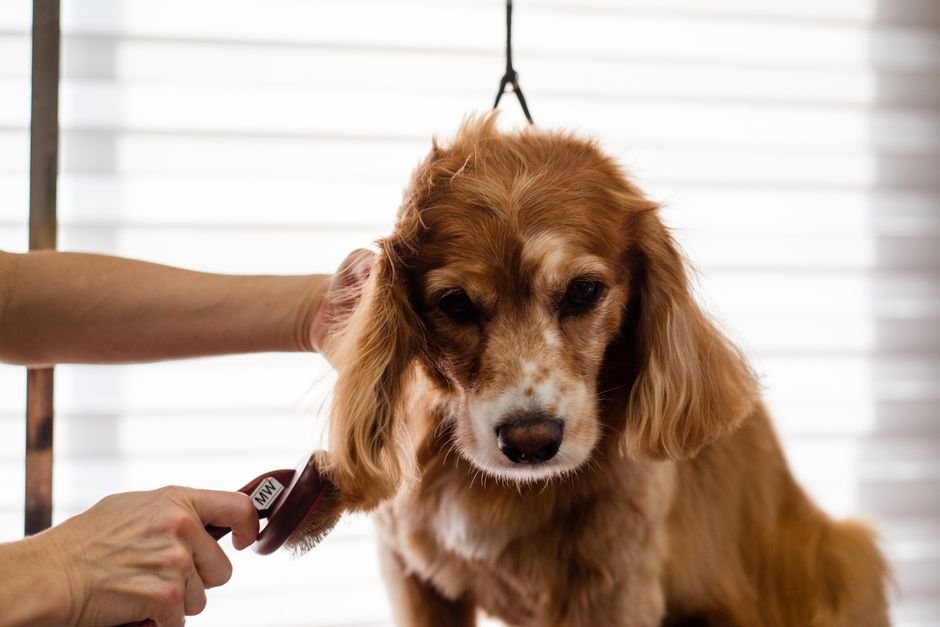
- Brush your dog several times a week during shedding season to cut airborne dander at the source.
- Give the purifier filter a visual or feel check weekly — don’t wait for the indicator light alone.
- Wash pet bedding weekly, since it holds settled dust and dander close to floor level.
- Run the purifier continuously rather than occasionally — cleaning products that are actually safe to use around both pets is worth checking before you add anything scented to the routine, since strong fragrances can undercut air-quality efforts.
Air Purifier for Cats and Dogs: Why Litter Dust and Dog Dander Compound Indoors
In a home with both species, litter dust and dog dander don’t just add up — they layer in the same low airspace, and most air purifier advice never accounts for that.
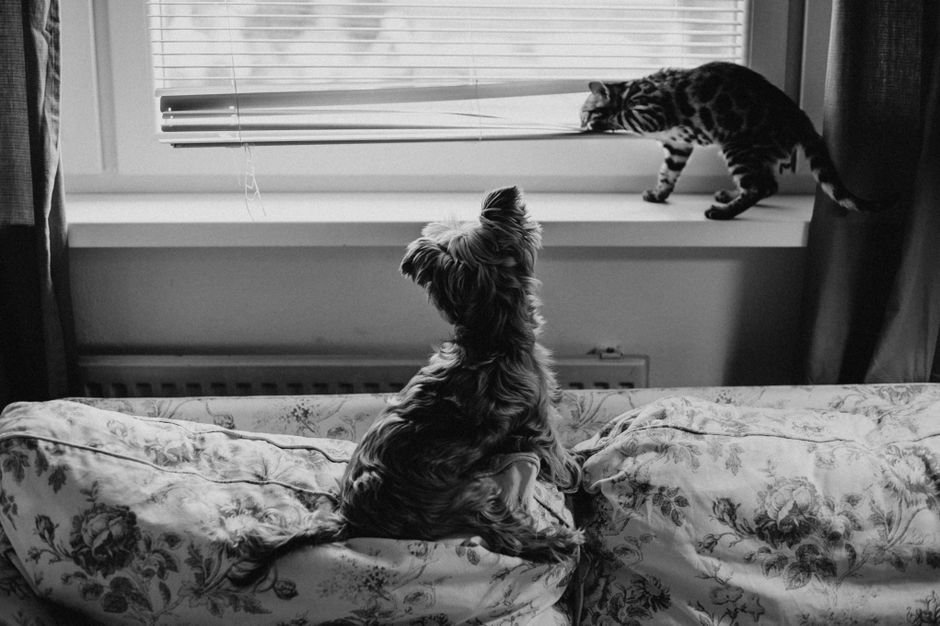
Yes — a home with both a cat and a dog usually needs more air-quality help than single-pet advice accounts for, because fine litter dust and dog dander settle in the same low, floor-level airspace and clog filters faster together than either would alone. The fix isn’t just buying an air purifier for cats and dogs; it’s placing that purifier correctly relative to the litter box and the dog’s favorite floor spots, choosing a lower-dust litter, and shortening your HVAC filter-change cycle.
Key takeaways
- ✓Litter dust settles low, exactly where a dog noses around, sniffs, and naps.
- ✓Two different particulate sources — mineral dust and dander — clog HVAC filters faster than single-pet estimates assume.
- ✓Purifier placement relative to the litter box and the dog’s floor spots matters more than raw purifier power.
- ✓Low-dust litter and a regular dog-grooming schedule cut the problem at the source, not just after it’s airborne.
- ✓A weekly routine, not reactive cleaning, is what actually keeps air quality manageable long-term.
Why Two Pets Create a Different Air Quality Problem Than One
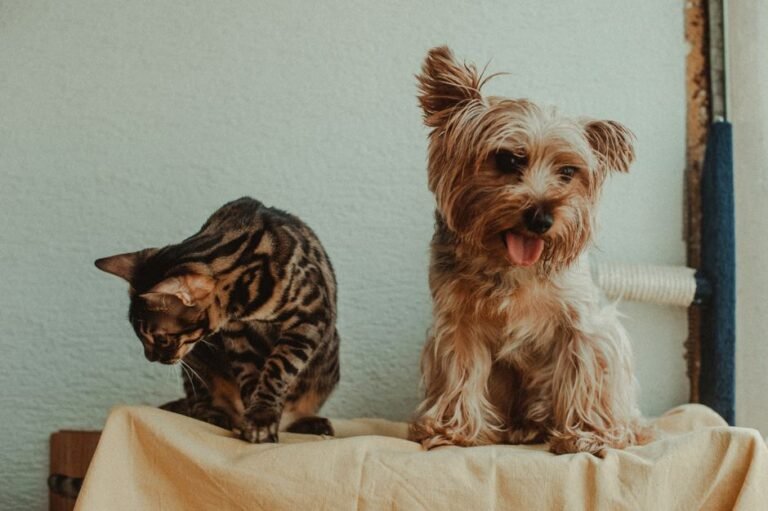
Most articles about pet-related air quality pick a lane. One set covers dog or cat dander and general “pet air purifiers.” A completely different set covers litter box dust and odor. They rarely overlap, because most households only have one kind of animal generating airborne particles. Yours has two, and that changes the math.
Clay and mineral litters release fine dust every time your cat digs, covers, or exits the box — light enough to stay airborne for a while and then settle on nearby surfaces. Dog dander is a separate, constant background source: skin cells and loose fur shed continuously, not just at the box. On their own, either is manageable with routine cleaning. Together, in the same room or hallway, they layer onto the same filters, floors, and furniture at the same time, which is why an air purifier for cats and dogs needs to be chosen and placed differently than a single-species version of the same product.
Gear that makes this easier
One Roof Paws is reader-supported. If you buy through the links below we may earn a small commission at no extra cost to you. We only suggest gear that fits the advice on this page.
These links open Amazon US. Search cards show product types, not tested winners. Check dimensions, suitability, shipping and availability before buying.


Frequently asked questions
Can one air purifier handle both cat litter dust and dog dander?
Yes, in most homes a single properly sized true-HEPA unit handles both, since it captures particles mechanically regardless of source. What matters more than having two units is placement — positioned to catch airflow from both the litter box area and your dog’s resting spots, not tucked in a corner near just one.
Does an air purifier get rid of litter box smell, or just dust?
A HEPA filter alone addresses particles, not odour. For smell specifically, look for a unit that pairs HEPA filtration with an activated carbon layer, which is what actually adsorbs odour molecules rather than just capturing solid particles.
What size air purifier do I need for a multi-pet home?
Size the unit to your room’s square footage using its CADR (Clean Air Delivery Rate) rating, then round up to the next size bracket rather than the exact match — two particulate sources in the same room clog a borderline-sized unit faster than the rating alone suggests.
Do I need a separate purifier for the litter box and one for the dog?
Usually not, if they share the same room or an open floor plan — one appropriately sized, well-placed unit covers both. A second unit only makes sense if the litter box sits in an enclosed room your dog rarely enters, since a closed door limits what one purifier can reach.
Sources and further reading
Filtration complements source control and particle filters do not remove every gas. See US EPA: air cleaners and air filters in the home.
Ozone generation is not a substitute for safe source control and filtration. See US EPA: ozone generators sold as air cleaners.
Follow cleaning-product labels and keep pets away during use and from residues. See ASPCA: poisonous household products.
These references provide background for the guidance above; they do not establish product testing or endorsement of a particular home layout. For individual health concerns, ask your veterinarian.

Better homes for cats, dogs, and the people who love both.