Camping With a Cat and a Dog: How to Set Up a Site (or RV) So Neither One Stresses Out
A practical guide to camping with a cat and a dog without turning your 10×10 site into a standoff
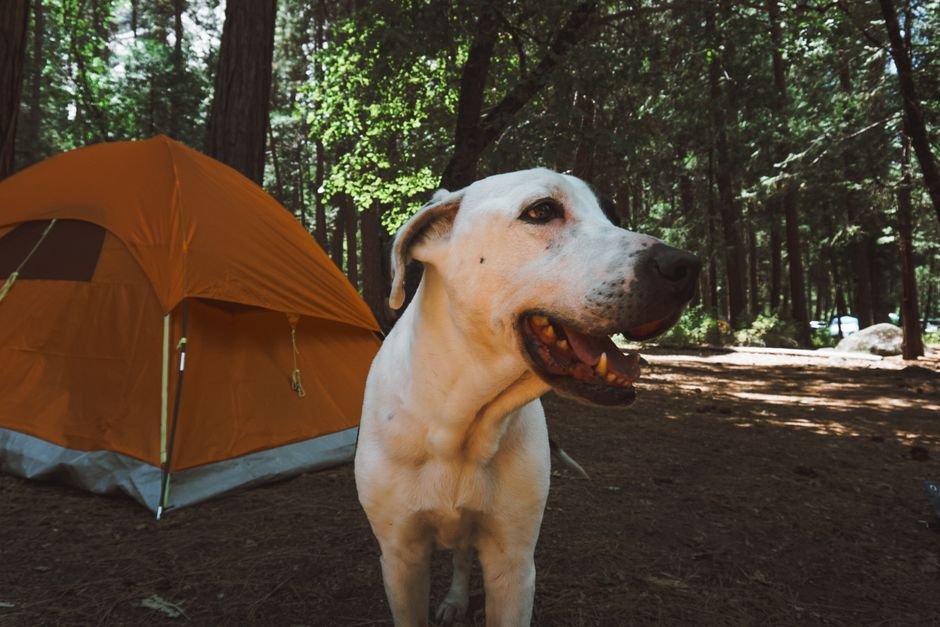
Camping with a cat and a dog works best when you treat them as needing different containment rules, not the same routine: give the dog a defined exercise zone (tie-out, exercise pen, or long line) while the cat stays on a harness and leash or in an enclosure at all times, and never let both animals be loose near the fire pit, trail entrance, or picnic table at once. Set up a separate, elevated or shaded spot for the cat’s litter box and carrier away from the dog’s area, and plan where each pet sleeps before you leave home.
Key takeaways
- ✓A cat should stay harnessed and leashed (or enclosed) outdoors at all times, while a dog can have supervised loose time — build your site layout around that difference instead of one shared routine.
- ✓Set up two containment zones before you do anything else: a dog exercise or tie-out area and a separate, shaded or elevated cat zone the dog can’t stumble into.
- ✓Nighttime sleeping arrangements (crate, tent divider, or RV cabinet) matter more on a mixed-pet trip than daytime activity, since unfamiliar sounds intensify after dark.
- ✓Wildlife, unfamiliar dogs at nearby sites, and shared food or water bowls are the three most common triggers that turn a calm campsite into a stressful one.
- ✓Test the full setup in your backyard or on a quiet local trail before a multi-night trip so you know how each pet actually reacts before you’re miles from home.
Why Camping With a Cat and a Dog Takes More Than Two Checklists Taped Together
Search for camping with pets and you’ll find two completely separate worlds. Dog-camping guides talk about long lines, swimming, and campfire etiquette. Cat-camping guides talk about harness training, keeping cats leashed at all times, and treating unfamiliar dogs as a hazard to manage around. Almost nothing addresses what happens when the dog and the cat in question already live together, already trust each other, and are both riding in the same car to the same site.
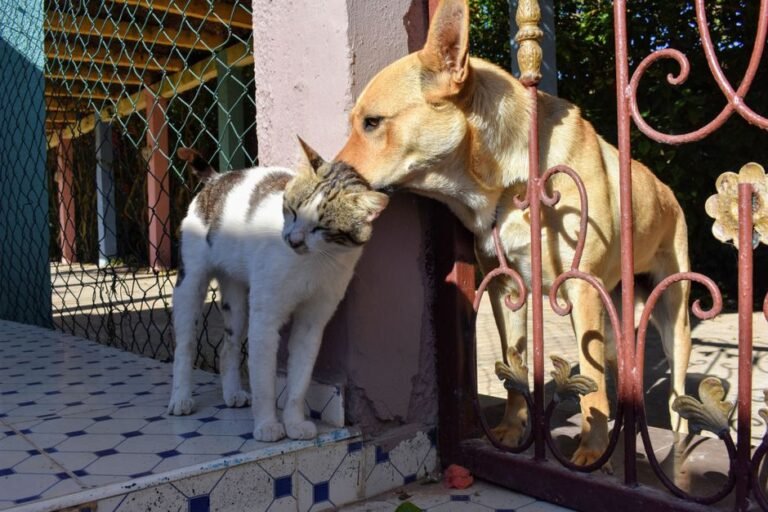
That distinction matters. Cat-only camping communities warn that cats and dogs who don’t know each other typically don’t mix well — which is true, but it’s advice written for strangers meeting on a trail, not for two pets who already share a couch. Your dog isn’t a threat to manage; he’s a travel companion with a very different set of freedoms than your cat is ever going to have outdoors, and that gap in freedom is the actual thing you need to plan around.
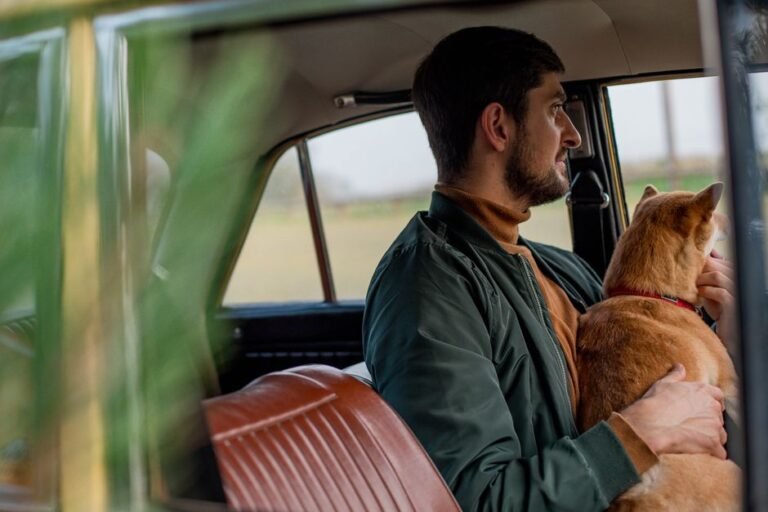
If you’ve already navigated flying with a cat and a dog or a hotel stay, camping adds one new variable neither of those trips has: there’s no door between your pets and the outside world. Every hour outdoors is an hour where a bird, a passing dog, or a rustling tent flap can trigger a very different reaction in each animal.
How Do You Set Up a Campsite So a Loose Dog Doesn’t Spook a Leashed Cat?
Start by physically dividing the site before you unpack anything else. Pick one side near the picnic table or vehicle for the dog’s exercise pen or tie-out, and a separate, shaded or slightly elevated spot — a cot, a picnic table bench, or a secured crate — for the cat’s leash range and carrier. The goal isn’t total separation; it’s making sure both animals are never loose and unsupervised in the same six feet of space at the same time.
Sequence your pets’ outdoor time instead of running it simultaneously. Walk or exercise the dog while the cat stays leashed and settled near the tent, then let the cat explore a supervised radius while the dog is crated or tied out with a chew. This sounds like extra effort, but it’s the single biggest difference between a calm site and a frantic one, because most flare-ups happen when a dog gets excited and bolts toward the cat’s leash range out of curiosity, not aggression.
The same zoning logic that works indoors applies outside — if you’ve set up shared spaces at home so each pet has a retreat, think of your campsite the same way: two defined zones with a neutral buffer, rather than one open area both pets are expected to share by default.
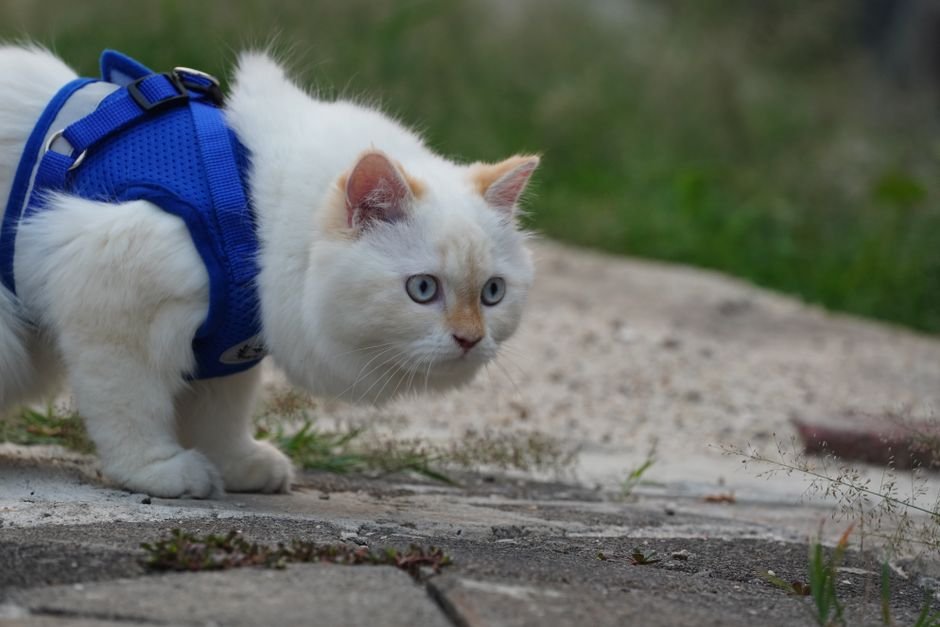
Where Does Each Pet Sleep at Night: Tent, Crate, or RV Cabinet?
Decide sleeping arrangements before you leave, not after the first night goes sideways. In a tent, a soft-sided crate for the dog and a secured carrier or small exercise pen for the cat, positioned on opposite sides of the tent, keeps a startled midnight reaction from becoming a chase. In an RV, use a designated cabinet, bunk, or crate area for each pet rather than letting both roam the same small cabin overnight — RV owners regularly report one pet settling fine while the other gets carsick or anxious and can’t calm down, and that same anxiety often follows them into the sleeping arrangement if there’s no defined space of their own.
Nighttime is when unfamiliar sounds — another campsite’s dog barking, raccoons near the trash, wind on the rainfly — hit hardest, because neither pet can see the source. A cat that’s used to a defined nighttime spot at home settles faster in a defined spot at camp, too; the same principle behind setting up a shared bedroom for a cat and a dog without a 3 a.m. turf war applies directly to a tent or RV cabin.
If your dog is a barker at unfamiliar noises, keep his crate or bed slightly farther from the cat’s spot than you think you need to, since a startled bark inches from a leashed cat is one of the more common causes of a spooked, scratching, tent-unzipping 2 a.m. incident.
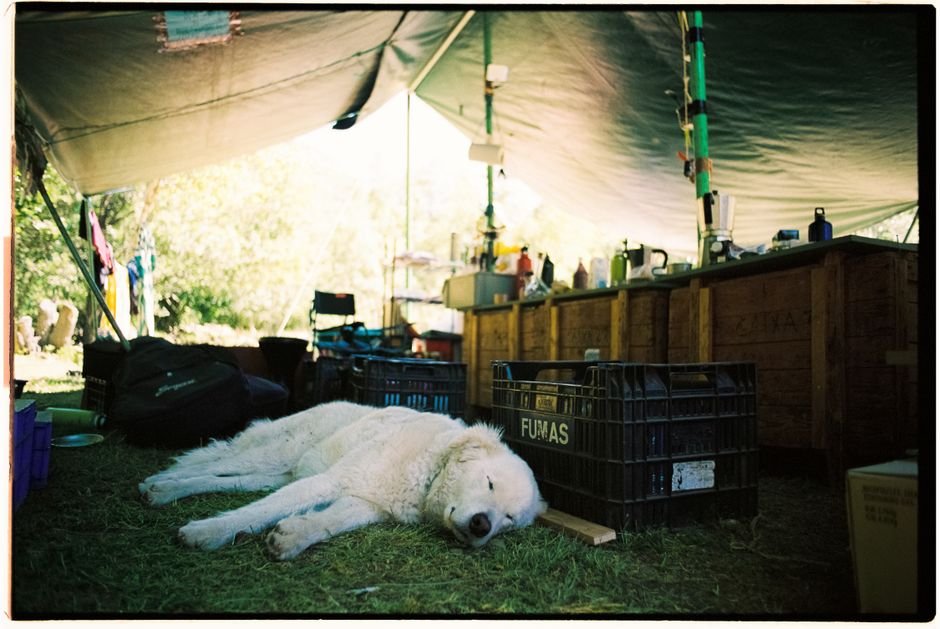
Managing Shared Food, Water, and Wildlife Attraction
Keep both pets’ food sealed in wildlife-proof containers overnight — raccoons, skunks, and even coyotes are drawn to camp kitchens, and an open bag of kibble is an invitation regardless of which pet it belongs to. Feed at set times rather than leaving bowls out all day, since free feeding at a campsite the way you might free feed at home just gives wildlife a standing invitation.
Separate the bowls physically, not just by species label. A dog will investigate a cat’s bowl out of curiosity even if he’s never done it at home, simply because everything at a new site smells different and interesting. This is the same cross-eating problem covered in why tracked litter and shared bowls are a two-pet problem at home — camping just removes the walls that normally keep the two areas apart.
Pack a portable litter box and set it up in a low-traffic, shaded corner of the cat’s zone, away from the cooking area and the dog’s tie-out radius. A collapsible box with a lightweight, low-tracking litter travels well and keeps the site smelling neutral, which matters more outdoors than you’d think — strong odors near a shared site can draw curious wildlife just as easily as food does.
What Happens When Something Spooks the Cat Mid-Hike?
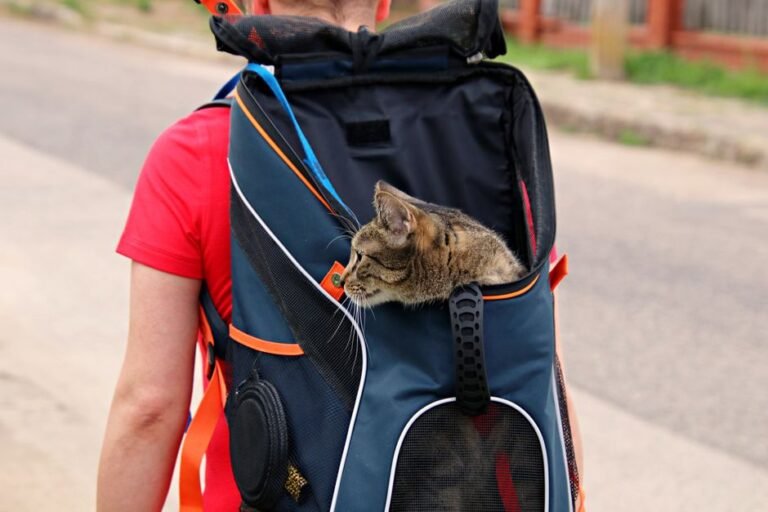
Even a well-adjusted cat can bolt at a passing off-leash dog, a bird flush, or a sudden ATV. The fix isn’t preventing every startle — that’s not realistic outdoors — it’s having a plan for the moment it happens. Cat-camping guides consistently recommend keeping cats leashed at all times specifically because a spooked, unleashed cat can disappear into brush in seconds, and that advice holds whether or not your own dog is nearby.
If your cat startles while your dog is mid-hike on a long lead, the priority order is: control your dog first (short the lead, ask for a sit or down), then scoop up the cat rather than chasing after a bolting animal, which almost always makes cats run farther. A harness with a quick-release front clip lets you gather your cat close without wrestling a full leash unclip in a panic.
Afterward, give your cat a few minutes in a covered carrier or your lap before continuing, rather than immediately resuming the hike. Cats regulate more slowly than dogs after a fright, and pushing forward too soon often means a second, smaller startle turns into a much bigger one.
Choosing a Campground That Actually Works for Both Pets
Call ahead and ask two separate questions: whether dogs are allowed off-leash in designated areas, and whether cats are permitted on trails and around the site at all — some campgrounds and hiking trails restrict cats even when dogs are welcome, since the two are typically regulated under different assumptions about roaming behavior. Don’t assume a dog-friendly listing automatically covers your cat.
Site spacing matters more with two species. A site tucked at the end of a loop, away from high-traffic paths and other campers’ dogs, gives your cat far more room to settle than a site right next to the shower building or a busy trailhead. If you’ve already learned how to vet a pet-friendly hotel listing for both pets, apply the same instinct here — read between the lines of a campground’s pet policy instead of assuming “pet friendly” means friendly to both of yours equally.
For a first trip, choose a campground with easy car access rather than a remote backcountry site. If the setup isn’t working — the cat won’t settle, the dog won’t stop alerting to every noise — you want the option to pack up and leave without a long hike back to the car.
Campsite Setup Checklist for a Cat and a Dog
- Two containment zones marked out before anything else is unpacked: a dog exercise area and a separate, shaded cat zone with a buffer between them.
- Current ID tags and up-to-date microchip info for both pets, plus a photo on your phone taken that morning in case you need to describe them to campground staff.
- A GPS tag or bell on the cat’s harness so you can locate her quickly if she slips the leash near brush or a stream.
- A portable, low-tracking litter box tucked into a low-traffic corner of the cat’s zone — see our litter and odour guide for travel-friendly litter options.
- Separate, clearly distinct food and water bowls placed on opposite sides of the site to reduce cross-eating and wildlife interest.
- Wildlife-proof storage for all pet food overnight, sealed and stowed in the vehicle or a bear box rather than left in the tent vestibule.
- A defined overnight sleeping spot for each pet — crate, carrier, or RV cabinet — decided before you leave, not improvised on night one.
Gear That Earns Its Space in the Car
- An escape-proof harness with a front clip for the cat, tested at home before the trip so it’s not a first-time fight at the campsite.
- A collapsible exercise pen or long tie-out line for the dog, giving him a defined roaming radius that doesn’t overlap the cat’s zone.
- A hard-sided or well-ventilated soft crate for nighttime containment, sized so the pet inside can stand and turn around comfortably.
- A collapsible litter box and a bag of low-dust, low-tracking litter, packed separately from other gear so it’s easy to set up first.
- A basic pet first-aid kit covering scrapes, tick removal, and any medication either pet takes regularly.
Gear that makes this easier
One Roof Paws is reader-supported. If you buy through the links below we may earn a small commission at no extra cost to you. We only suggest gear that fits the advice on this page.
These links open Amazon US. Search cards show product types, not tested winners. Check dimensions, suitability, shipping and availability before buying.


Frequently asked questions
Can you take a cat camping with a dog?
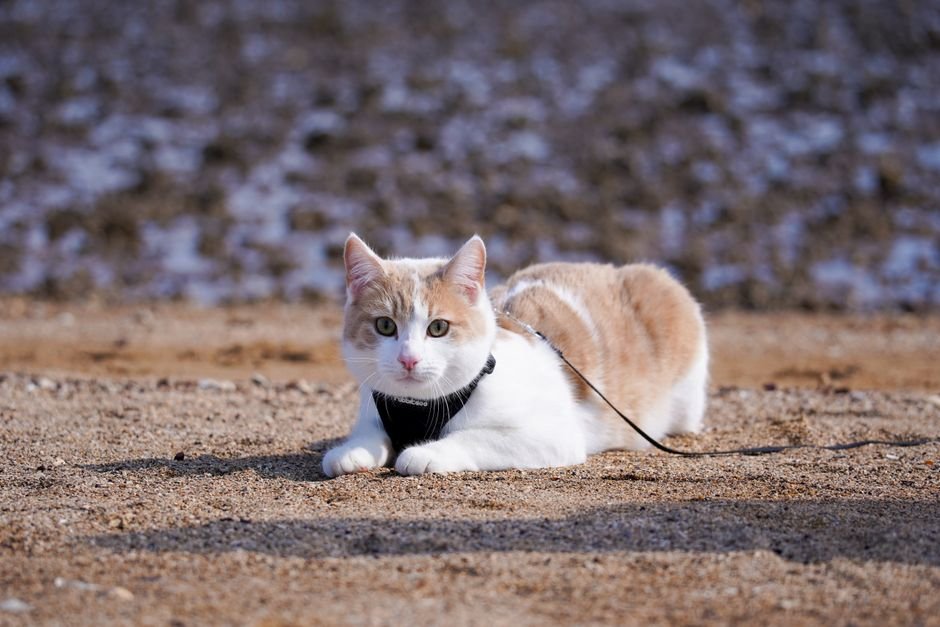
Yes — the key is planning around their different containment needs rather than expecting one shared routine to work for both. Keep the cat on a harness and leash or in an enclosure at all times outdoors, give the dog a defined exercise zone, and avoid letting both animals roam loose in the same space simultaneously.
Do cats and dogs actually get along at a campsite if they already live together?
Generally yes, since campsite stress usually comes from novelty and containment mismatches, not from the pets themselves. Most of the widely-shared warnings about cats and dogs not mixing well are written for pets meeting as strangers on a trail, which is a different situation from two animals that already share a home.
Do campgrounds allow both cats and dogs?
Policies vary by campground and even by trail within the same park, so call ahead and ask about cats specifically rather than assuming a dog-friendly listing covers your cat too. Some sites permit off-leash dog areas but still require cats to be leashed or crated at all times.
How do I stop my dog from eating the cat’s food or getting into her litter box at a campsite?
Place the bowls and litter box in physically separate zones with a clear buffer, and feed on a schedule rather than leaving food out. This is the same cross-species overlap covered in our guide on why tracked litter is a two-pet problem, and the fix travels well: contain, don’t just separate by intention.
Should I test camping with my cat and dog at home before a real trip?
Yes — set up the tent or a mock campsite in your backyard for an afternoon and evening before committing to a multi-night trip. This lets you see how each pet reacts to the crate, the harness, and being outdoors together in a low-stakes setting where you can adjust before you’re far from home.
Browse the full Travel guide for more ways to take a cat and a dog on the road together.
Sources and further reading
Check official departure and destination requirements for each animal before international travel. See GOV.UK: taking pets abroad.
Arrival rules differ from departure rules; check the current route-specific requirements. See GOV.UK: bringing a pet to Great Britain.
These references provide background for the guidance above; they do not establish product testing or endorsement of a particular home layout. For individual health concerns, ask your veterinarian.

Better homes for cats, dogs, and the people who love both.