Can a Dog Door Keep Your Cat Indoors? What to Check Before Buying
Choose controls for the direction that matters—and plan for what happens when the flap is already open.
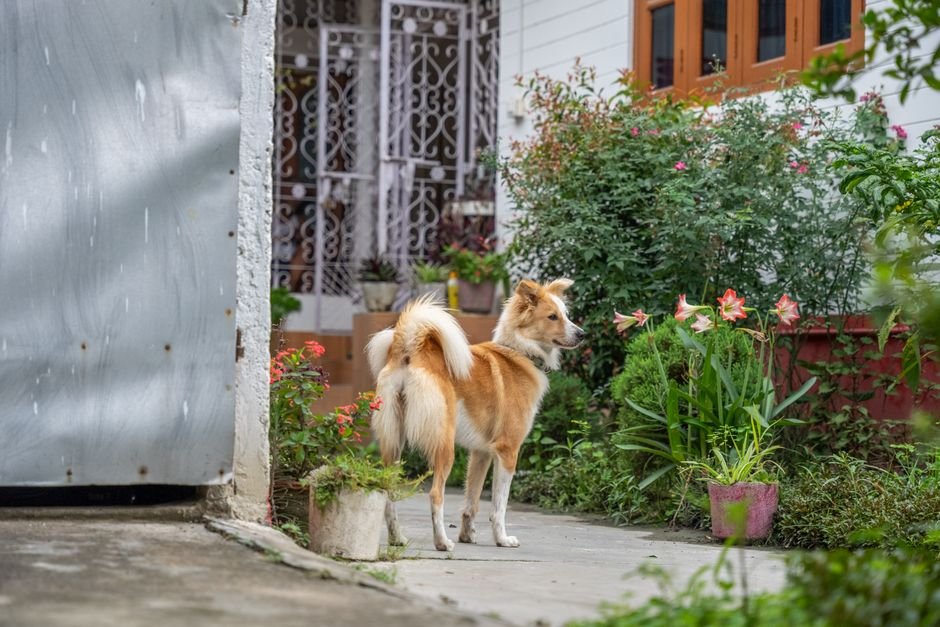
A selective-entry dog door does not necessarily stop a cat leaving. Look for explicitly documented selective exit on a model that fits your dog, and remember that tailgating through an open flap remains possible. For reliable separation, keep the cat away from the dog’s exterior access route or use supervised yard trips.
Before choosing a door
- ✓Check selective exit, not just selective entry.
- ✓Confirm the exact model fits your dog.
- ✓No pet door is a guaranteed escape-prevention system.
- ✓Separate access routes can help only if the cat cannot reach the exterior opening.
What does “selective entry” actually mean?
Selective entry describes which animal can come into the house through a door. A reader outside recognises an approved microchip or collar tag and releases the entry lock. That feature does not, by itself, decide which pet can leave from the inside.
This distinction matters because a product described as a microchip pet door may let any animal exit. Do not assume that leaving your cat’s chip unregistered keeps the cat indoors. Read the exact model’s manual and look for explicit, individual exit permissions.
Sure Petcare identifies selective exit as a DualScan feature. Its Microchip Pet Door manual describes selective entry with ordinary entry and exit in normal operation. Similar product names do not mean identical controls.
Can a selective-exit door guarantee that the cat stays inside?
No. A compatible selective-exit model can restrict which registered animal unlocks a closed flap. It cannot guarantee containment while the flap is already open for another animal. A cat may follow closely behind the dog, exploit a damaged flap, or use another open exit in the home.
Think of the lock as one layer of a containment plan. It does not replace supervision, a secure physical boundary or a backup arrangement when the door is in training mode, unlocked or out of power.
If an escape would put your cat at particular risk, choose a setup where the cat cannot reach the dog’s exterior opening. The FelineVMA indoor/outdoor position statement provides useful context for discussing lifestyle risks and welfare with your veterinarian.
Will the door fit your dog?
Measure your dog and check the manufacturer’s flap opening, recommended animal size and installation instructions. A cat-sized selective-exit product may be unsuitable for a medium or large dog, regardless of how well its electronics work.
Ask the manufacturer to confirm the exact model’s inward and outward scanning, the compatible chip or tag, and whether the required dog size is supported. A shared manual lock or time-based curfew is different from individual exit permission.
Do not try to make a pet fit through an opening that is too small, or reverse an installation to improvise a control feature. Door orientation, weatherproofing and emergency access should follow the current instructions.
A safer layout when the dog needs free yard access
Create a dog access zone between the shared living space and the exterior door: for example, a utility room that the dog can enter while the cat stays behind a secure interior boundary. The cat then has no direct route to the exterior flap.
An ordinary low gate or a gate with a cat opening may not contain your cat. Cats can climb and jump, and a barrier must also suit the dog’s behaviour, the household’s movement and the building. A closed interior door is often easier to reason about than an untested gap.
If you cannot separate the route reliably, scheduled supervised trips through an ordinary door are a practical option. A dog door is a convenience, not a requirement. Keep the cat’s food, water, litter and resting spaces comfortably accessible on its side of any boundary; see our cat sanctuary room guide.
How to check a new installation
Before either animal uses it freely, inspect the mounting, latch, flap and seals. Confirm the approved animal can activate the required direction and that an unapproved animal cannot unlock a closed flap from that side. Follow the manufacturer’s training procedure rather than forcing an animal through.
Observe both pets together under supervision. Check whether the cat approaches during a dog passage and whether the flap closes and relocks as documented. A successful test of one closed-flap attempt is not proof that tailgating cannot occur.
Try the documented locked and power-loss states while you are present. Keep another way to let the dog out, and use a secure physical boundary whenever the system is uncertain. Ask the manufacturer about faults rather than relying on an improvised repair.
Questions to ask before you buy
Does this exact model identify animals on exit, or only on entry? Can it allow the dog to leave while preventing the cat from unlocking the outward latch? What happens in training mode, during a power failure, or if a collar tag is lost?
Will the opening suit your dog’s measurements, and can it be installed safely in your door or wall? What maintenance does the latch need? How will you prevent the cat from reaching an already-open flap?
If a listing cannot answer those questions, do not treat an “electronic”, “smart” or “microchip” label as enough evidence. Save the current manual and get written clarification for the model you are considering.
What about a cat-only door inside the home?
The reverse problem—giving a cat access to a litter or feeding room while excluding the dog—is a separate use case. An interior microchip door may be useful, but its opening, scanning direction and the dog’s size still matter. Small dogs can fit through some cat openings.
Plan access around the cat’s mobility and comfort, and check that a dog cannot interfere while the flap is open. This is not a reason to assume the same equipment will safely control an exterior exit. Our litter access-control guide explains that interior setup.
Gear that makes this easier
One Roof Paws is reader-supported. If you buy through the links below we may earn a small commission at no extra cost to you. We only suggest gear that fits the advice on this page.
These links open Amazon US. Search cards show product types, not tested winners. Check dimensions, suitability, shipping and availability before buying.
Frequently asked questions
Will an unregistered cat be stopped by every microchip dog door?
No. Some models scan only for entry. An unregistered cat may still leave through the ordinary exit. Check selective exit in the exact model’s documentation.
Does installing a separate dog door remove the escape risk?
No. A cat can still approach or follow the dog through that opening. A separate access zone helps only when the cat is physically kept away from the exterior route.
Is a DualScan cat flap suitable for a large dog?
Do not assume so. Check the manufacturer’s opening dimensions and supported animal size. A cat-sized product may be unsuitable for a larger dog.
Is a fast relock enough to prevent tailgating?
No relock speed guarantees that another animal cannot pass while the flap is open. Use supervision and a physical separation strategy where containment matters.
What if I cannot securely separate the pets near the exit?
Use supervised yard trips through a normal door rather than relying on electronics for cat containment. A qualified behaviour professional can help with a difficult household layout.
Explore practical access controls for a mixed-pet home.

Better homes for cats, dogs, and the people who love both.