Can Dogs Eat Cat Food? What’s Dangerous, What’s Fine, and When to Call the Vet
In a cat-and-dog home the bowl-raiding goes both ways — here’s what actually happens when your dog eats cat food (or your cat eats the dog’s).
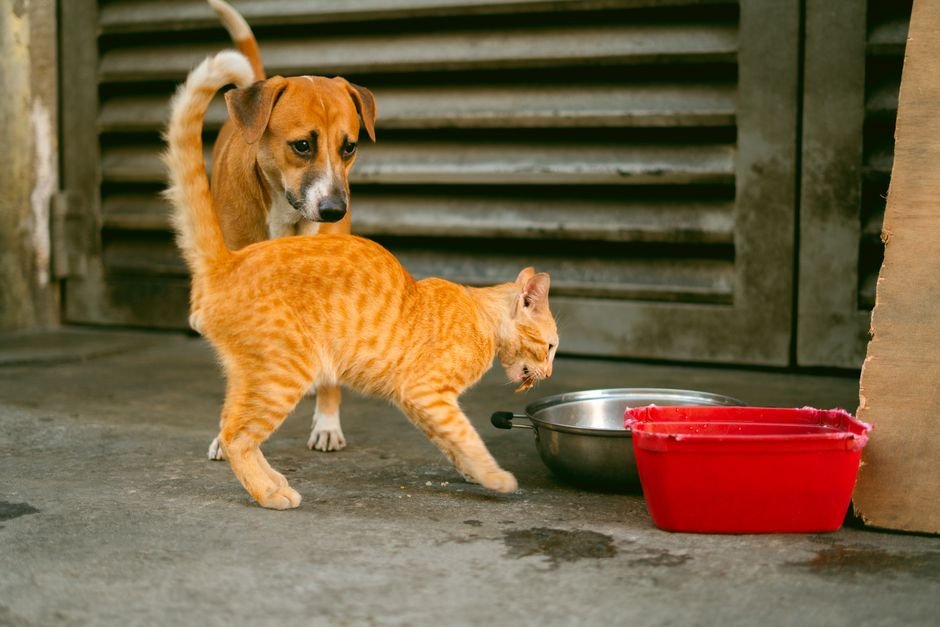
Dogs can eat a small amount of cat food without harm, but cat food is too high in protein and fat for dogs to eat regularly and can cause an upset stomach or, over time, weight and pancreatic problems. Cats eating dog food occasionally is also fine, but dog food lacks the taurine and animal-based nutrients cats need, so it must never replace a cat’s proper diet. A single accidental bowl raid rarely needs a vet — call if you see repeated vomiting, diarrhoea, lethargy, or your pet ate a very large amount.
Key takeaways
- ✓A one-time swap in either direction is usually harmless — the real risk comes from it becoming a habit.
- ✓Cat food harms dogs mainly through excess protein and fat (upset stomach short-term, weight and pancreatic risk long-term).
- ✓Dog food shortchanges cats on taurine and other nutrients they can’t make themselves, causing deficiency if it becomes their main meal.
- ✓Watch for repeated vomiting, diarrhoea, lethargy, or belly pain — those are your ‘call the vet’ signals.
- ✓Prevention beats cleanup: separate feeding stations, timing, and height solve the problem at the source.
Can dogs eat cat food safely?
Here’s the honest answer most single-species pet sites won’t give you plainly: if your dog snuck a few bites of the cat’s dinner, you almost certainly don’t need to panic. Cat food isn’t toxic to dogs the way chocolate or grapes are. The problem is nutritional, not poisonous.
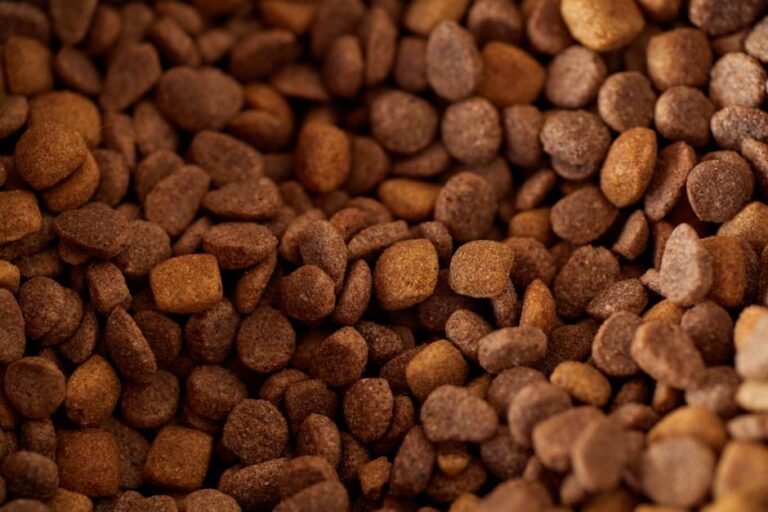
Cat food is formulated for obligate carnivores. That means it’s significantly richer in protein and fat than dog food, and it’s often more calorie-dense per mouthful. A dog’s digestive system can handle a small, occasional amount, but that richness is exactly why a big helping — or a daily habit — causes trouble.
In the short term, the most common result of a dog raiding the cat’s bowl is a plain old upset stomach: vomiting, loose stools, maybe some gas and discomfort for a day. Over the long term, if a dog regularly eats cat food, the extra fat and calories can drive weight gain and, in some dogs, contribute to pancreatitis — a painful inflammation of the pancreas that the high fat load can trigger.
What about cats eating dog food — is that a problem?
This is the direction almost no one covers, but in a two-pet home it happens just as often. The reassuring part: dog food isn’t harmful to cats in small, occasional amounts either. Your cat licking the dog’s bowl clean once won’t hurt her.
The concern is the opposite of the dog situation. Where cat food is too rich for dogs, dog food is too thin for cats. Cats are obligate carnivores with needs dogs simply don’t have — most importantly taurine, an amino acid cats can’t produce in enough quantity themselves. Dog food isn’t reliably fortified with it because dogs make their own.
If dog food becomes a cat’s regular diet, the shortfall in taurine and other animal-based nutrients can lead to serious deficiencies over weeks and months, affecting heart and eye health. So the rule flips nicely: dog eating cat food is a ‘too much of a rich thing’ problem; cat eating dog food is a ‘not enough of the right things’ problem. Neither is an emergency after one bowl — both are a problem if they become the norm.
How much cat food will actually hurt a dog?
There’s no universal gram count, because it depends on your dog’s size, sensitivity, and health. A 40kg Labrador that inhales half a cup of cat food will likely be fine; a tiny dog with a sensitive stomach eating the same amount may throw up. As a rough guide, a small, one-off nibble is a non-event, a full bowl may cause a day of digestive upset, and repeated large helpings are what create real risk.
Dogs with a history of pancreatitis, those who are overweight, and small breeds are the ones to be more careful with — the high fat content hits them harder. If your dog falls into one of those groups and gets into a large amount of cat food, it’s worth a call to your vet even if he seems fine at first.
The single biggest factor, though, isn’t the one accident — it’s frequency. An occasional theft is a manageable annoyance. A dog that eats cat food every day is on a diet that’s quietly working against his health, which is why solving the access problem matters more than measuring any single raid.
Dog ate cat food — what to do right now
If you’ve just caught the raid, take a breath and do a quick assessment rather than reaching for anything drastic. Note roughly how much was eaten, when, and whether your dog has any existing health issues. For a healthy dog and a normal amount, the right move is usually to simply watch.
Offer fresh water, hold off on the next big meal for a couple of hours to let the stomach settle, and keep an eye out over the next 24 hours. Most dogs pass through a minor overindulgence with nothing worse than a soft stool. Don’t try to induce vomiting or give any human medication unless your vet specifically tells you to.
The same watch-and-wait approach applies when the roles reverse. If it keeps happening, the fix isn’t better cleanup — it’s better setup. Our guide on how to stop your dog from eating the cat’s food and our roundup of feeding station setups that actually work tackle the root cause.
When should you call the vet?
Most bowl raids never make it to a vet visit, but there’s a clear line worth knowing. Call your vet — or an out-of-hours emergency line — if you see repeated vomiting, ongoing or bloody diarrhoea, obvious lethargy or weakness, loss of appetite lasting more than a day, a swollen or painful belly, or signs of severe discomfort like a hunched posture and restlessness.
Those symptoms matter most when a dog has eaten a very large amount of rich cat food, when there’s a history of pancreatitis, or in small and senior pets who tolerate less. For cats, the worry isn’t a single dog-food meal — it’s a pattern. If your cat has been eating mostly dog food for a stretch, mention it at your next check-up so your vet can assess for any nutritional gaps.
When in doubt, a phone call costs nothing and your vet would always rather field a quick question than see a problem that waited too long. You know your pet’s normal behaviour better than anyone — trust that baseline, and act if something’s clearly off.
Preventing the two-way raid for good
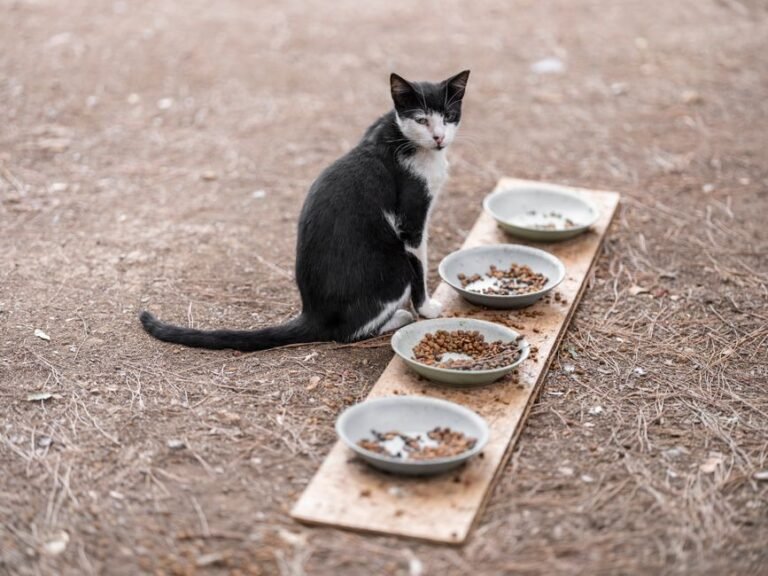
Because the real risk in both directions is repetition, the lasting solution is a feeding setup where neither pet can reach the other’s bowl. The classic move is height: cats are happy to eat up high where most dogs can’t follow, so an elevated surface or a cat shelf keeps the cat’s rich food out of the dog’s reach.
Timing helps too. Feeding both pets at the same time, in separate spots, and picking up bowls once they’re done removes the leftover buffet that invites grazing. A predictable routine does a lot of the heavy lifting — our room-by-room feeding schedule lays out exactly how to structure it.
For homes where willpower and timing aren’t enough, technology bridges the gap. Microchip-activated feeders open only for the right pet, and thoughtful room layout keeps the two diets physically separate. You’ll find more of these ideas in our guide to feeding both pets without food theft and across the wider Feeding section.
Your quick watch-vs-call checklist
- One-off small nibble, pet acting normal: watch, offer water, carry on as usual.
- Full bowl eaten, mild soft stool or single vomit: watch for 24 hours, delay the next big meal.
- Repeated vomiting or ongoing diarrhoea: call your vet.
- Lethargy, weakness, or refusing food for over a day: call your vet.
- Swollen or painful belly, hunched posture: call promptly — this can signal pancreatitis.
- Large amount eaten by a small, senior, or pancreatitis-prone pet: call even if they seem fine.
Fast fixes to stop the cross-eating
- Feed the cat up high on a shelf, counter, or cat tree the dog can’t reach.
- Feed both pets at the same time in separate rooms or zones.
- Pick up all bowls the moment the meal is over — no lingering buffet.
- Use a microchip or selective feeder that opens only for the intended pet.
- Keep any bulk food bags sealed and stored where neither pet can chew in.
Frequently asked questions
Can dogs eat cat food every day?
No. While an occasional bite is harmless, cat food is too high in protein and fat for a dog’s daily diet and can lead to weight gain and, in some dogs, pancreatitis over time. It should never replace proper dog food.
Will one bowl of cat food hurt my dog?
For a healthy adult dog, one bowl is unlikely to cause anything worse than a day of mild digestive upset like loose stools or a single vomit. Watch for 24 hours and call your vet if symptoms are repeated or severe, especially in small, senior, or pancreatitis-prone dogs.
Is dog food bad for cats?
Occasionally, no — but as a regular diet, yes. Dog food lacks enough taurine and other animal-based nutrients cats can’t make themselves, so relying on it can cause serious deficiencies affecting the heart and eyes over weeks and months. Cats need cat food as their main diet.
My dog ate cat food and is throwing up — what should I do?
A single vomit after overeating is common. Offer fresh water, hold off on the next big meal for a couple of hours, and monitor. If vomiting repeats, you see diarrhoea, or your dog becomes lethargic or won’t eat, contact your vet.
How do I stop my cat and dog eating each other’s food?
Feed the cat up high where the dog can’t reach, feed both pets at the same time in separate spots, remove bowls as soon as meals end, and consider a microchip feeder that only opens for the right pet. Consistent timing and separation solve most cases.
For more setups, schedules, and gear that keep both bowls where they belong, explore our full Feeding guide.
Sources and further reading
Diets and feeding plans must account for each animal’s nutritional needs. See WSAVA global nutrition guidelines.
The physical environment and opportunities for natural behaviour matter for cat welfare. See FelineVMA: meeting the needs of indoor cats.
These references provide background for the guidance above; they do not establish product testing or endorsement of a particular home layout. For individual health concerns, ask your veterinarian.
Better homes for cats, dogs, and the people who love both.