How to Feed a Cat and Dog in the Same House Without Food Theft
A smart-tech feeding station setup guide for learning how to feed a cat and dog in the same house when one keeps raiding the other’s bowl
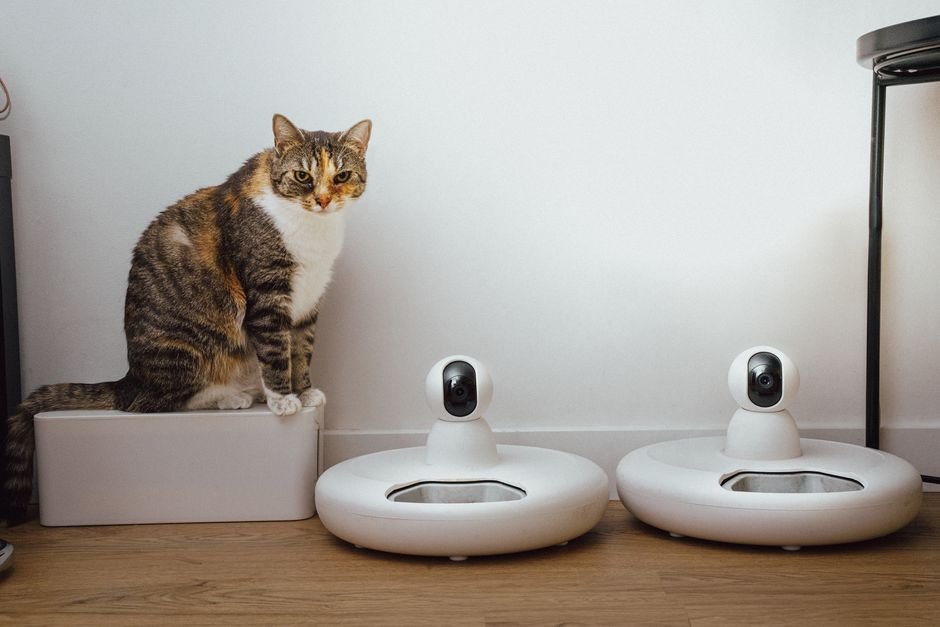
To feed a cat and dog in the same house without food theft, treat the whole room as one system rather than buying a single gadget. Use a microchip feeder that only opens for your cat’s chip to protect her food, feed the dog on a scheduled portion at floor level in a separate zone, and stagger or supervise meals so neither animal has time to raid the other’s bowl. The goal is separation by height, timing, and access control at the same time.
Key takeaways
- ✓Food theft goes both ways: a microchip feeder guards the cat’s bowl, but the dog’s bowl is still an open buffet the cat picks at.
- ✓Solve it as a station system using three levers at once: height, timing, and access control.
- ✓Microchip feeders that read your cat’s existing chip beat weight or collar-tag feeders in most cat-and-dog homes.
- ✓Feed the dog on a scheduled, timed feeder and pick up bowls promptly so nothing sits out to be stolen.
- ✓Match the tech to your actual room layout before you buy anything expensive.
Why does my dog keep eating the cat’s food (and my cat nibble the dog’s)?
It comes down to biology and opportunity. Cat food is higher in protein and fat and simply smells more interesting to a dog, so a food-motivated dog will hoover up a cat bowl the second it’s unguarded. Meanwhile cats are grazers who eat small amounts many times a day, which means a cat bowl left out becomes a target — and a curious cat will absolutely sample the dog’s kibble if it’s sitting there.
The mistake most owners make is treating this as a one-way problem. They buy a covered feeder for the cat, feel relieved, and never notice the cat is now snacking from the dog’s open bowl or that the dog is guarding the shared feeding corner. A real solution protects both animals’ meals and removes the opportunity entirely, which is exactly what a proper station does. If your specific issue is a relentless dog, our deep dive on how to stop your dog from eating the cat’s food pairs well with this guide.
The three levers of a theft-proof feeding station
Every reliable setup pulls on three levers at the same time. Rely on only one and a determined pet will find the gap; combine all three and mealtime finally goes quiet.
Height means putting the cat’s food somewhere a dog physically can’t follow — a counter, a shelf, or a cat-only perch. Timing means neither bowl sits out long enough to be raided, so you feed measured portions and clear up promptly instead of free-feeding. Access control means the feeder itself decides who eats, using your cat’s microchip or a proximity tag so the lid only opens for the right animal.
Think of these as layers. Height stops the dog from reaching the cat’s food, access control stops him even if he does reach it, and timing stops the cat from grazing on the dog’s leftovers. Our companion piece on feeding a cat and dog in the same room breaks the layout side down further if your space is tight.
Choosing the right smart feeder for a multi-pet household
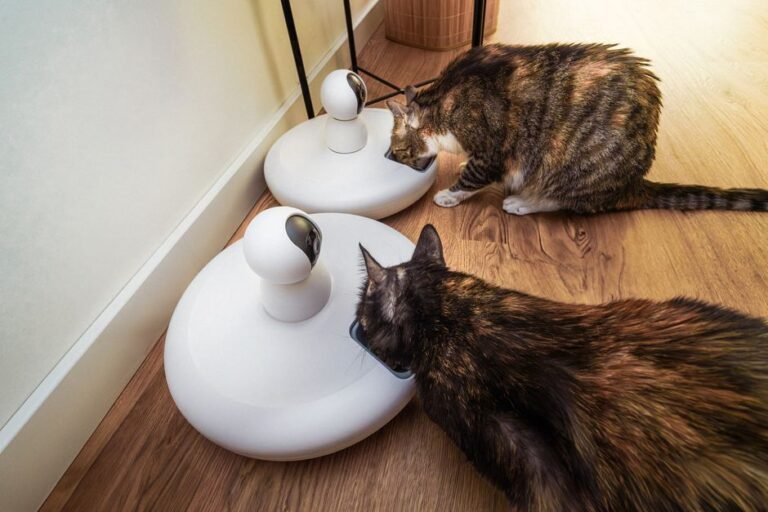
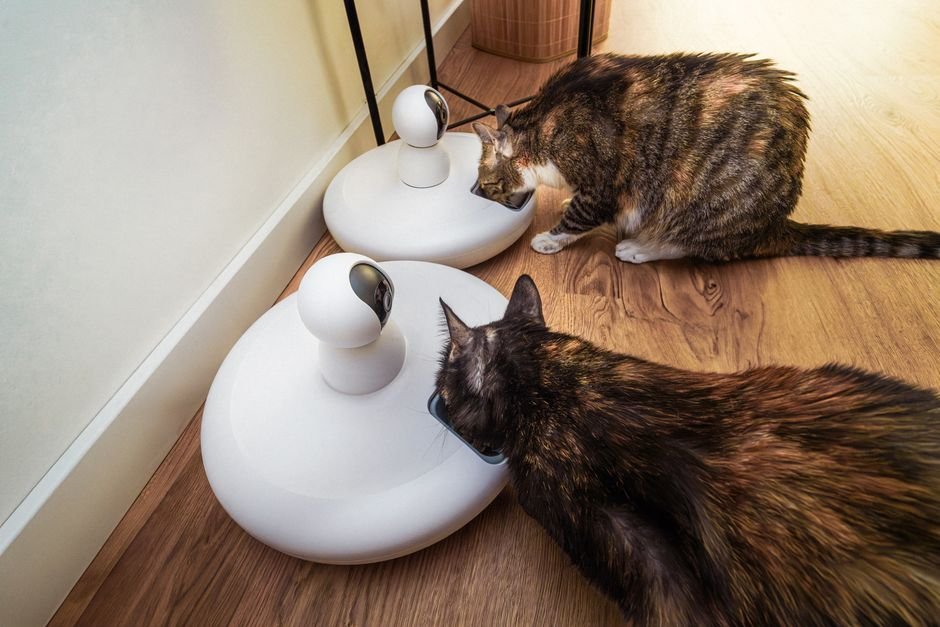
The single best tool for the cat’s side of the equation is a microchip feeder. These read the same ISO microchip your cat already has implanted, and the lid only slides open when that specific chip is within range — so the dog can sniff and paw all he likes and the bowl stays sealed. Because it uses the existing chip, there’s no collar tag to lose and no risk of the dog wearing a tag that accidentally triggers it.
If your cat isn’t chipped, look for feeders that come with an RFID collar tag as a backup, but be aware a nosy dog can sometimes learn to nudge a collar-tagged cat toward the bowl. Weight-based selective feeders exist too, but in mixed homes a big cat and a small dog can fall into overlapping weight ranges, so microchip-reading models are the safer default.
For the dog’s side, a programmable automatic feeder dispenses a measured portion on a schedule and then there’s nothing left over to tempt the cat. Pairing a microchip feeder for the cat with a timed portion feeder for the dog is the combination that finally ends the buffet in both directions. For a broader look at which gadgets earn their keep, see the smart pet tech that actually helps in a multi-pet home.
Designing the layout around your actual room
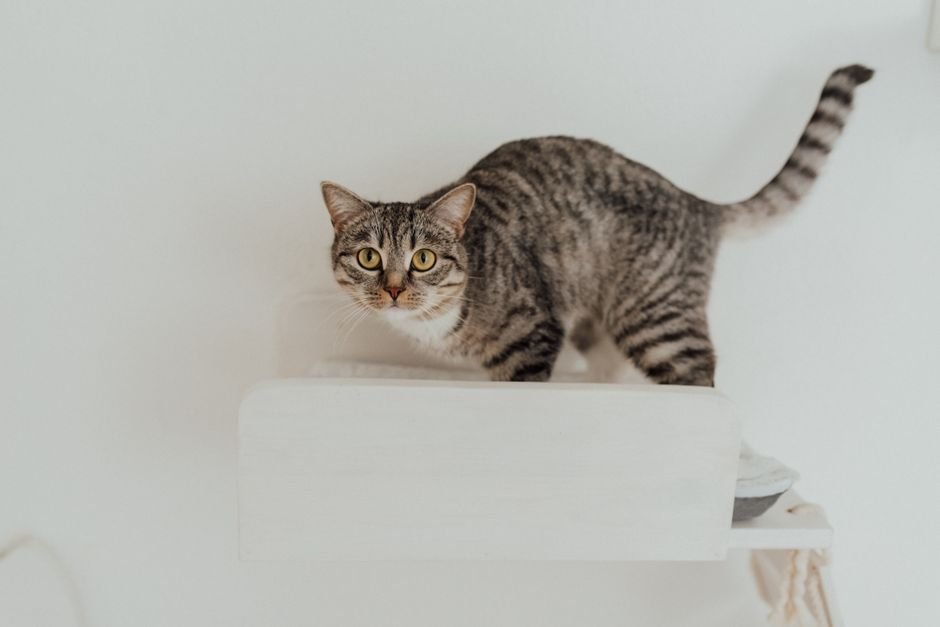
Tech only works if it fits your space. Walk the room and decide where the cat can eat undisturbed and where the dog eats without being able to follow. The classic answer is feeding the cat up high — a sturdy shelf, a washer top, or a cat tree platform — and feeding the dog at floor level a few feet away, ideally with a sightline break so the dog isn’t fixating on the cat’s plate.
A pet gate with a cat-sized opening, a cracked door propped just wide enough for the cat, or a baby gate the dog can’t clear all create a cat-only feeding zone cheaply. Combine that physical barrier with the microchip feeder inside it and you have belt-and-braces protection. For nine specific, tested arrangements, our guide on where to put the cat’s food so the dog can’t get it is worth bookmarking, and the shared living room setup guide covers vertical space more broadly.
Handling different diets and different schedules
Many cat-and-dog homes aren’t just fighting theft — they’re juggling a prescription or weight-control diet for one pet, a puppy on three meals a day, or a senior cat that grazes. Smart feeders shine here because you can set exact portions and times per animal, so the diabetic cat gets her precise meal at the right hour and the dog can’t inflate his calorie count with stolen food.
Stagger meals when schedules clash: feed the dog first in his zone while the cat’s microchip feeder stays sealed, then release the cat to eat once the dog is settled. Keep fresh water available in more than one spot so nobody has to compete, and clean bowls and feeders regularly to avoid odour and bacteria — just check that whatever you use is safe, as covered in our roundup of cleaning products safe for cats and dogs. If a pet is on a vet-prescribed diet, confirm any feeding-schedule changes with your veterinarian first.
Your theft-proof feeding station checklist
- A microchip feeder for the cat, programmed to her ISO chip (or an RFID collar tag as backup).
- A programmable portion feeder or measured bowl for the dog, cleared away after meals.
- A height difference or physical barrier so the dog can’t reach the cat’s eating spot.
- A cat-only zone created by a gate opening, cracked door, or raised platform.
- Separate water sources so hydration never becomes a competition.
- A consistent feeding schedule, staggered if the two pets can’t eat calmly together.
- A quick clean-up routine so no food sits out as an open invitation.
Frequently asked questions
Will a microchip feeder work if my cat isn’t microchipped?
Yes — most microchip feeders ship with an RFID collar tag you can program instead. That said, a curious dog can occasionally learn to nudge a collar-tagged cat toward the bowl, so getting your cat microchipped by a vet gives the most reliable, tamper-proof result.
How do I stop my cat from eating the dog’s food?
Feed the dog measured portions on a schedule rather than leaving a bowl out all day, and pick the bowl up as soon as he’s finished. With nothing sitting out to graze on, the cat loses the opportunity. Feeding the dog in a separate zone the cat isn’t invited into also helps.
Can I just feed them in different rooms instead of buying tech?
Separate rooms with a gated doorway can work well and costs almost nothing. The catch is timing — if food stays out, a determined pet will slip in later, so you still need to clear bowls promptly. Smart feeders simply automate that protection for busy households.
Is it safe to feed a cat up high on a counter or shelf?
For most healthy, agile cats it’s a practical solution, since jumping is natural for them. Make sure the surface is stable and non-slip, keep it clear of hazards, and rethink it for senior cats or those with mobility or joint issues who may struggle to jump safely.
What’s the biggest mistake people make when setting this up?
Protecting only the cat’s food and forgetting the dog’s bowl. A microchip feeder seals the cat’s meal, but if the dog’s bowl sits out the cat will graze from it, so you’ve only solved half the problem. Treat both bowls, plus timing and layout, as one system.
Ready to build the full setup? Explore our Smart Pet Tech guide for more tools that keep peace in a cat-and-dog home.
Sources and further reading
The physical environment and opportunities for natural behaviour matter for cat welfare. See FelineVMA: meeting the needs of indoor cats.
Check specific model instructions before relying on access control. See SureFeed microchip pet feeder specifications.
These references provide background for the guidance above; they do not establish product testing or endorsement of a particular home layout. For individual health concerns, ask your veterinarian.

Better homes for cats, dogs, and the people who love both.