Where to Put the Cat’s Food So the Dog Can’t Get It: 9 Feeding Station Setups That Actually Work
Wondering where to put cat food so your dog can’t reach it? Here are 9 real-home feeding station setups ranked by dog size and floor plan.
To keep your dog out of the cat’s food, put the cat’s bowl somewhere the dog physically can’t follow: an elevated surface like a counter or sturdy shelf, a cat tree perch, or a cat-only room behind a baby gate the cat can jump. For determined or tall dogs, a microchip feeder that only opens for your cat is the most reliable fix. Choose the setup based on your dog’s size and jump height and your home’s layout.
Key takeaways
- ✓The right setup depends on two things: how tall your dog can reach and how much floor space you have to work with.
- ✓Elevation works for small-to-medium dogs but fails with large or jumping dogs — height alone isn’t enough.
- ✓A cat-only zone (gate, cat door, or dedicated room) removes the dog from the equation entirely and is the most reliable low-tech option.
- ✓Microchip and selective feeders are the gold standard when the dog is persistent, tall, or fast.
- ✓Combine a physical setup with a consistent feeding routine so the cat learns where and when food appears.
Why dogs raid the cat’s bowl in the first place
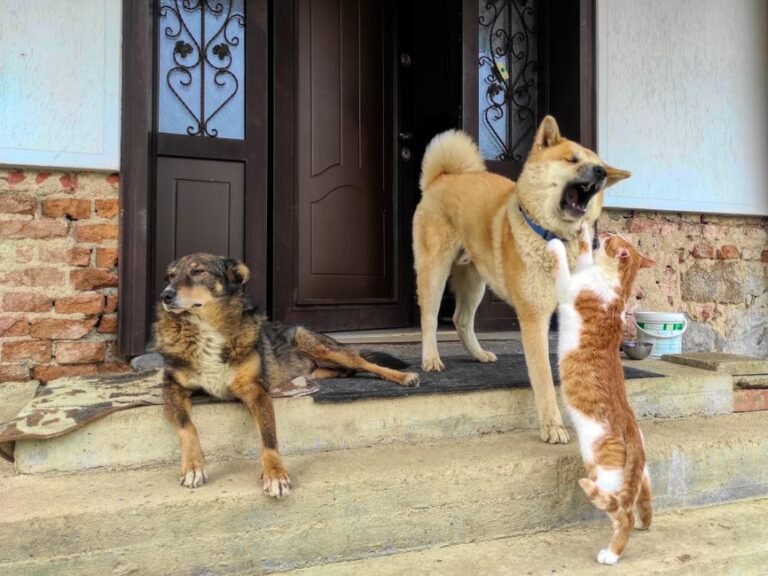
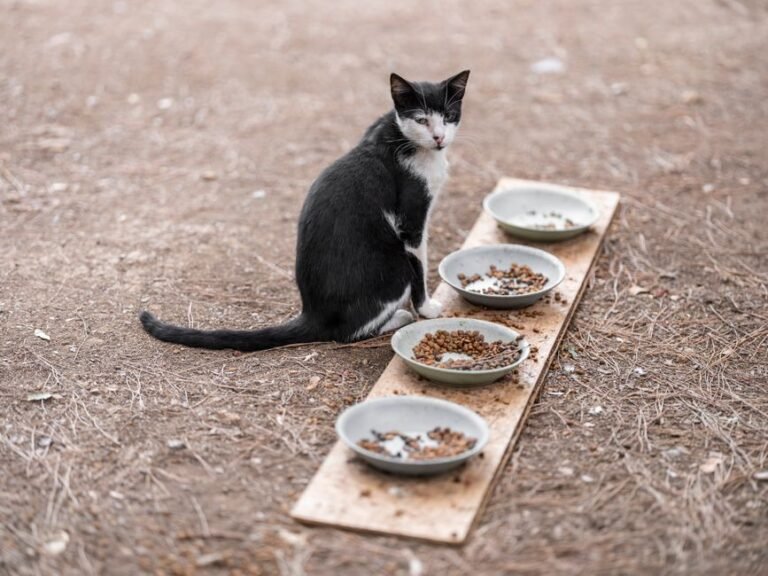
Cat food is engineered to be irresistible to dogs. It’s higher in protein and fat and far more calorie-dense than dog food, which means it smells and tastes like a jackpot to a dog who inhales meals in seconds. Your cat, meanwhile, tends to graze — walking away from a half-eaten bowl and coming back later. That timing gap is all a dog needs.
This is a physical-access problem, not a training failure. You can absolutely reduce the behaviour with cues and routine (we cover that in how to stop your dog from eating the cat’s food), but the most reliable fix is to put the food somewhere the dog simply cannot get to. That’s what the setups below are all about — matching a physical configuration to your specific dog and home.
How do you choose the right setup for your dog and home?
Before you pick a station, measure two things. First, your dog’s reach: stand them on their back legs against a counter and note where their nose lands, because that’s the real height they can access, not their standing height. Second, look at your floor plan for a spot the cat can reach from above or through a gap the dog can’t fit through.
As a rule of thumb: small dogs (under ~25 lb / 11 kg) are usually beaten by simple elevation. Medium dogs need elevation plus distance or a barrier. Large or athletic dogs — and any dog that can jump onto furniture — need a true barrier or a selective feeder, because they’ll clear a counter or leap a low shelf without blinking.
9 feeding station setups, from simplest to most dog-proof
- Countertop or kitchen island: The classic. Push the bowl toward the back so a jumping cat lands safely. Works for most small-to-medium dogs; useless if your dog counter-surfs.
- Sturdy wall shelf at cat height: Mount a shelf 3–4 feet up with an easy launch point nearby (a chair or cat tree). Great for saving floor space in small homes — see our guide on using vertical space in a shared living room.
- Cat tree feeding perch: Feed on a wide platform of a cat tree. Cats love eating from a secure vantage point, and most dogs can’t climb one. Choose a tree with a base wide enough to hold a bowl steady.
- Top of a washer, dryer, or dresser: An underused flat surface most dogs can’t reach. Add a non-slip mat so the bowl doesn’t slide.
- Baby gate with a cat gap: A pressure-mounted gate across a doorway, with a small gap at the bottom or a cat door built in. The cat slips through; a larger dog can’t. Best when there’s a clear size difference between your pets.
- Raised gate the cat jumps over: Mount a gate a few inches off the floor so the cat can hop the gap underneath, or use a tall gate the cat clears but the dog respects. Ideal for small cats and non-jumping dogs.
- Dedicated cat-only room: Feed inside a spare room, laundry, or bathroom with the door cracked just wide enough for the cat, or fitted with a cat flap. This is the most flexible low-tech option and also makes a natural spot for the litter box — see where to put the litter box when you have a dog.
- Interior cat door in a door or wall: A permanently installed cat flap into a closet, laundry, or partitioned corner gives the cat a private dining room the dog can never enter. Worth it for large or determined dogs.
- Microchip or RFID selective feeder: A covered bowl that only opens for your cat’s microchip or collar tag and closes when they walk away. This is the most dog-proof option of all and solves the grazing problem too. More on gear like this in our roundup of smart pet tech that actually helps in a multi-pet home.
Frequently asked questions
How high does a shelf or counter need to be to stop my dog?
Measure your dog’s nose-to-floor reach when standing on their back legs, then add a margin. For most small-to-medium dogs a surface 3 feet or higher works, but large or jumping dogs can reach 4–5 feet or leap onto furniture, so elevation alone won’t stop them — use a barrier or selective feeder instead.
Are microchip feeders worth the money in a cat-and-dog home?
If your dog is large, fast, or persistent, yes. A microchip feeder only opens for your cat’s chip or tag and shuts when they leave, which stops the dog completely and also keeps the cat’s grazed food fresh. It’s the most reliable option when elevation and barriers keep failing.
What if my cat won’t eat in a new spot?
Move gradually. Feed at the current location first, then shift the bowl a little each day toward the new station, and keep the surface non-slip and stable. Cats prefer a calm, secure spot where they can see the room, so a perch or elevated surface often works better than a cramped corner.
Can I just feed them at the same time in the same room?
You can try supervised same-time feeding with bowls far apart, but it rarely holds up because cats graze and dogs finish fast, then wander over. A physical separation — even just an elevated surface or a gated area — is far more reliable than relying on timing and supervision alone.
Will a baby gate really keep my dog out?
It works when there’s a clear size difference: a small cat slips through a gap or hops a low gate that a bigger dog can’t follow. It fails if your dog can jump the gate or squeeze through the same opening, so match the gate style to your dog’s size and athleticism.
For more real-home solutions to two-species mealtimes, browse our full Feeding guide.
Sources and further reading
Diets and feeding plans must account for each animal’s nutritional needs. See WSAVA global nutrition guidelines.
The physical environment and opportunities for natural behaviour matter for cat welfare. See FelineVMA: meeting the needs of indoor cats.
These references provide background for the guidance above; they do not establish product testing or endorsement of a particular home layout. For individual health concerns, ask your veterinarian.

Better homes for cats, dogs, and the people who love both.