Cat and Dog Entryway Setup: Building an Airlock That Stops Door-Dashing and Bolting
A step-by-step cat and dog entryway setup that sequences gates, pet doors, and routines so a dog’s excitement at the door never becomes the window your cat needs to slip out.

A cat and dog entryway setup works like an airlock: a buffer zone between your front door and the rest of the house, with a gate containing the dog before the outer door ever opens and the cat kept out of that transition zone entirely. No single gate or pet door solves both risks at once, because a dog’s door-dash is loud and visible while a cat’s bolt is silent and happens in the exact moment you’re distracted managing the dog — the layout has to separate those two tasks instead of relying on one barrier to catch both.
Key takeaways
- ✓An airlock entryway uses two barriers — an outer door and an inner gate — so neither pet is ever loose with both open at once
- ✓A dog’s door-dash is visible and trainable; a cat’s bolt is silent and happens during the exact seconds you’re distracted by the dog
- ✓Microchip pet doors like SureFlap control selective entry, not selective exit — almost any pet can still walk out unless you manually switch to an in-only lock
- ✓Giving the cat a perch two to three feet up in the buffer zone gives her somewhere she’d rather watch from than a reason to run for the door
- ✓Consistent sequencing — gate the dog, confirm the cat’s location, then open the outer door — matters more than any single product
What Is a Cat and Dog Entryway Setup, and Why Do You Need One?
A cat and dog entryway setup is built like an airlock: two barriers instead of one, so a person entering or leaving the house never has both the outer door and an inner gate open to loose pets at the same time. Most “stop the door dash” advice online is written for one species at a time — a dog-training site covers impulse control at the door, a cat-behavior site covers indoor confinement — but almost none of it walks through what happens when you own both and they’re reacting to the same doorbell.
The reason this matters is timing, not training. In a single-pet house, you manage one risk at the door. In a cat-and-dog house, the two risks don’t happen one after another — they happen in the same five seconds, and whichever pet you’re not actively watching is the one that gets out.
Why a Dog’s Door-Dash and a Cat’s Silent Bolt Aren’t the Same Problem
A dog’s door-dash is usually loud and visible: paws scrambling, body weight thrown at the gap, maybe a bark. It’s unpleasant, but it’s a behavior you can see coming and interrupt with a leash, a “wait” cue, or a hand on the collar. Most dog trainers treat it as an impulse-control problem you chip away at with repetition.
A cat’s escape rarely looks like that. She isn’t lunging at the door; she’s sitting a few feet back, watching, and she moves the instant there’s a gap — often while you’re mid-sentence greeting a guest or crouched down holding the dog’s collar. Multiple shelter and behavior resources note that door-dashing is a shared risk for cats and dogs alike, not just a dog problem, because any pet who’s learned the front door means freedom will take advantage of an open gap. The layout has to assume your attention will be on the dog at the exact moment the cat sees its chance.
Building the Physical Airlock: Where the Gate Actually Goes
Start with placement: the gate or pen goes three to four feet inside the front door, not pressed right up against the threshold. That buffer zone is the airlock — the space where you can close the outer door completely before you ever deal with the inner barrier. If you’re managing both a cat and a dog crossing the same hallway, a pet gate with a built-in cat door lets your cat pass through a small flap at floor level while the main gate stays closed to the dog.
Check bar spacing before you buy anything — most cats can slip through gaps wider than about three inches, so a gate rated for “small dogs and cats” on the box isn’t automatically cat-proof. For corners or wider entryways, an exercise-pen configuration wrapped around the space works better than a single straight gate, since it closes off the sideways routes a cat will take around a gate’s edges.

Does a Microchip Pet Door Actually Keep Your Cat Inside?
No — not on its own, and this is the single most common false-security point in a shared entryway. SureFlap’s own product description states that its microchip pet doors use “selective entry,” meaning the reader only controls who can come in; any animal, chipped or not, is still free to exit. PetSafe’s microchip doors work the same way in their standard automatic mode — the chip reader only scans pets coming in from outside, not going out.
Both brands do offer a manual lock that can be set to “in-only,” which blocks exit entirely — but it’s an all-or-nothing switch for the whole door, not a per-pet rule. In a mixed household, locking the door to in-only to stop your cat from bolting also stops your dog from going out, which usually isn’t the goal. If you’re weighing whether a pet door can replace a gate in your setup, it’s worth reading through what a dog door can and can’t do for keeping a cat contained before you install one as your only barrier.
Give the Cat Somewhere Better to Be Than the Door
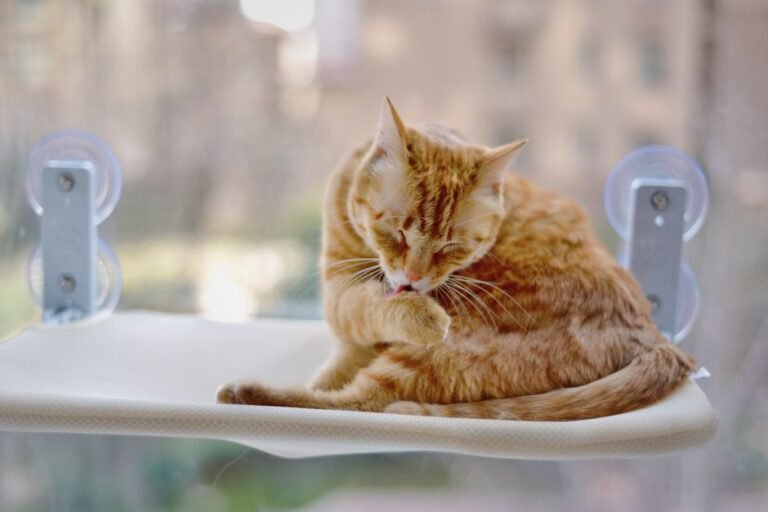
Part of stopping a bolt is giving the cat less reason to want out in the first place. The American Association of Feline Practitioners’ position statement on indoor cats notes that a cat’s environment is directly tied to its physical health, emotional wellbeing, and behavior — an entryway that only feels like a hallway to bolt through doesn’t meet that bar. A perch or shelf set two to three feet up inside the buffer zone gives her a vantage point to watch who’s coming and going from a height she finds safe, instead of waiting at floor level by the door.
If your cat already has a dedicated retreat elsewhere in the house, the entryway doesn’t need to duplicate it — it just needs to not compete with the door as the only interesting spot in the hallway. For the deeper layout of a cat-only zone with its own gate spacing and escape-route logic, see our guide to building a dog-free cat sanctuary room, which applies the same gate-and-barrier thinking to a different part of the house.

The Step-by-Step Routine: Who Gets Managed First
The physical airlock only works if the sequence is consistent every single time, including for guests. The order that holds up best in practice: gate or pen the dog first, confirm the cat isn’t already inside the buffer zone, then open the outer door. Closing the outer door fully before releasing the dog from the inner barrier is what actually makes it an airlock instead of just a gate — a single open door with a loose dog and an unlatched gate is the same risk you started with.
If you want eyes on the cat’s location without physically checking every time, a camera covering the entryway buffer zone removes the guesswork. Our guide to pet cameras for multi-pet households covers how AI-based cameras tell which pet is where, which is useful the moment you’re not sure if the cat slipped past before the gate closed.
Airlock Entryway Setup Checklist
- Install a gate or exercise pen three to four feet inside the front door to create a true buffer zone, not right at the threshold
- Choose gate bar spacing narrow enough that your cat can’t squeeze through — commonly under three inches
- Add a pass-through cat flap at the base of the gate so the cat can cross the buffer zone without the gate being opened for her
- If using a pet door in an exterior wall, assume it’s selective entry only unless you manually switch it to an in-only lock
- Give the cat a perch or shelf within the buffer zone, two to three feet up, as an alternative to pacing at floor level
- Keep food, water, and litter out of the airlock zone so neither pet has a reason to linger there
- Practice the full sequence with the dog on leash several times before trusting it off-leash with guests
Signs Your Current Entryway Isn’t Actually Containing Both Pets
- You regularly find the cat waiting right at the door when you come home, not behind a barrier
- The dog can physically reach the door before the inner gate is latched
- Guests or delivery people can open the outer door before any inner barrier is closed
- A pet door is the only barrier standing between your cat and the yard
- You’ve already had at least one near-miss where a pet made it past the threshold
Gear that makes this easier
One Roof Paws is reader-supported. If you buy through the links below we may earn a small commission at no extra cost to you. We only suggest gear that fits the advice on this page.
These links open Amazon US. Search cards show product types, not tested winners. Check dimensions, suitability, shipping and availability before buying.


Frequently asked questions
Can a baby gate alone stop both a dog from dashing and a cat from bolting?
Usually not by itself. A properly sized gate can stop most dogs from reaching the door, but many cats can squeeze through standard bar spacing or jump over a low gate entirely, so the gate needs narrow spacing plus a height-based deterrent like a perch, or a combined gate-and-cat-door setup rather than a gate alone.
What’s the real difference between selective entry and selective exit on a pet door?
Selective entry means the door’s microchip reader only checks pets coming in from outside and controls who’s allowed to enter; it does not check or restrict who leaves. Selective exit — stopping specific pets from going out while allowing others — isn’t a standard automatic feature on most consumer microchip doors; the available workaround is a manual, all-or-nothing in-only lock that affects every pet using that door.
How tall should a cat’s perch be in the entryway buffer zone?
Two to three feet up is a common, practical height — tall enough to give the cat a vantage point above foot traffic and the dog’s eye level, but low enough to install on most entryway walls or furniture without major modification.
Do I need a separate airlock if I already have a sanctuary room for my cat?
Yes, because they solve different problems. A sanctuary room gives your cat a dog-free retreat inside the house; the entryway airlock is specifically about the moment someone opens the front door to the outside world, which is a different risk even if your cat never goes near her sanctuary room.
What should I do if both pets rush the door at the same time?
Don’t try to grab both at once. Use the inner gate to physically block the dog first — even closing it partway buys you a second — then scoop or redirect the cat, and only open the outer door once both pets are confirmed behind a barrier.
Browse the full Shared Spaces guide for more room-by-room layouts built the same way, with gate sequencing and barriers designed for a cat and a dog under one roof.

Better homes for cats, dogs, and the people who love both.