Cleaning Products Safe for Cats and Dogs (and the Ones That Aren’t)
A dual-species safety guide to picking cleaning products safe for cats and dogs — one bottle that protects the whole household.

Cleaning products safe for both cats and dogs are those free of phenols, ammonia, bleach, undiluted essential oils, and quaternary ammonium compounds. Fragrance-free plant-based cleaners, diluted white vinegar solutions, and enzyme cleaners rinsed and dried before pets return are generally the safest dual-species choices. Because cats metabolize chemicals differently than dogs, always let surfaces dry fully before allowing either pet back.
Key takeaways
- ✓Cats are the stricter safety constraint — many products fine for dogs are toxic to cats, so choose for the cat and the dog is covered too.
- ✓Avoid phenols, ammonia, bleach, and concentrated essential oils, which are the most common household-cleaner dangers for cats.
- ✓‘Natural’ does not mean ‘safe’ — tea tree, pine, and citrus oils can be harmful to cats even in plant-based products.
- ✓Letting surfaces dry completely before pets return removes most residue risk from otherwise-fine cleaners.
- ✓One well-chosen cleaner for the whole home beats juggling two conflicting single-pet product lists.
Why one product has to pass two different tests
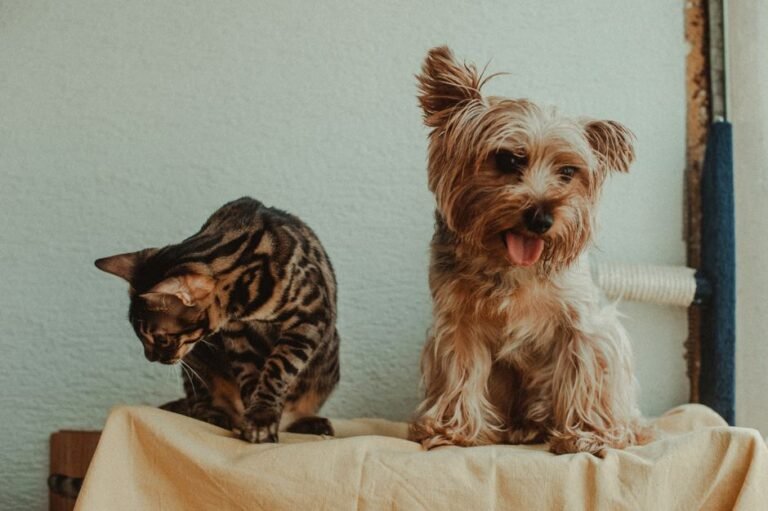
If you only had a dog, cleaning-product shopping would be simpler. Dogs are relatively hardy, and most mainstream cleaners marketed as ‘pet-safe’ were written with dogs in mind. But add a cat to the household and the rules change, because cats lack certain liver enzymes that break down common chemical compounds. What a dog can walk across and shrug off can genuinely harm a cat that licks the same floor and then grooms its paws.
That’s the core problem with the internet’s cleaning advice: most of it answers ‘is this safe for dogs?’ or ‘is this safe for cats?’ as two separate questions. In a home with both, you need the answer to both at once — and the cat is almost always the harder test to pass. The good news is that this makes your shopping easier: pick a product that clears the cat’s bar, and your dog is automatically covered too.
What ingredients are toxic to cats and dogs?
The most reliable way to shop is by ingredient, not by front-label marketing. A handful of common cleaning chemicals cause the majority of pet-related concerns, and they’re worth memorizing so you can scan a label in seconds.
Phenols are the biggest one for cat owners. Found in many old-school disinfectants and some ‘medicated’ cleaners, phenols are especially dangerous to cats because their bodies can’t process them efficiently. Ammonia (in many glass and floor cleaners) is a strong respiratory irritant for both species and, notably, smells like cat urine — which can also encourage a cat to mark the spot. Bleach is caustic and irritating, though heavily diluted and fully rinsed it’s sometimes used for disinfection. Quaternary ammonium compounds (‘quats,’ listed as benzalkonium chloride) are common in disinfecting wipes and sprays and can cause painful mouth ulcers in cats who walk through residue and groom it off.
Then there are essential oils. This is where ‘natural’ cleaners trip people up — tea tree, pine, citrus, eucalyptus, and wintergreen oils are all potentially harmful to cats, particularly in concentrated form. A plant-based floor cleaner scented with pine oil is not automatically a safe choice just because it skips synthetic chemicals.
Which cleaning products are actually safe for cats and dogs?
The safest dual-species approach is boring, and that’s a compliment. Fragrance-free, plant-derived cleaners with short ingredient lists tend to be the least risky. Simple diluted white vinegar (roughly one part vinegar to one part water) handles a lot of everyday floor and surface cleaning, deodorizes, and leaves no dangerous residue once it dries.
For messes with a biological source — litter accidents, vomit, drool, muddy paw prints — enzyme cleaners are your friend. They break down the actual proteins causing stains and smells rather than just masking them, which is exactly what you want in a home producing both cat and dog messes. We go deeper on odour and residue routines in our guide to keeping a home clean with both a cat and a dog.
Whatever you choose, the single most protective habit costs nothing: apply, wipe or rinse, and let the surface dry completely before either pet returns. Most residue risk lives in wet or freshly-treated surfaces. Ventilate the room, keep pets out until it’s dry to the touch, and you’ve neutralized the majority of everyday concerns.
Room-by-room: matching the cleaner to the mess
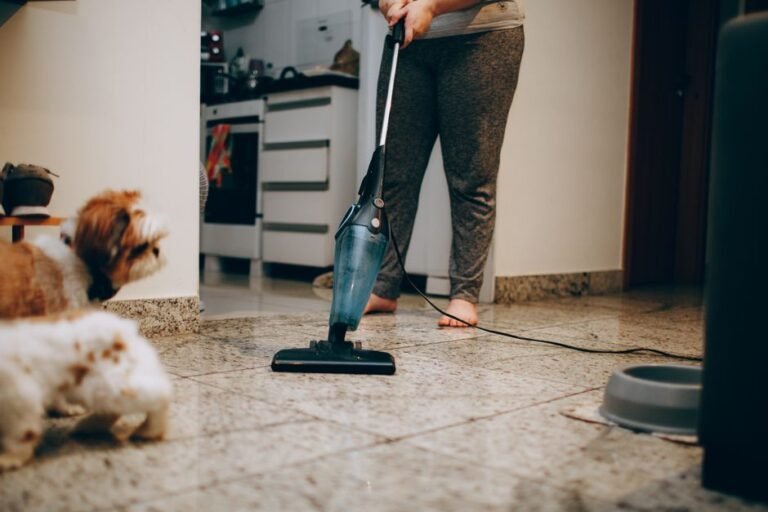
Floors take the most abuse in a two-pet home, since both animals walk, shed, and occasionally have accidents on them. A diluted vinegar solution or a fragrance-free plant-based floor cleaner covers routine mopping; save enzyme cleaners for spot-treating accidents. Skip anything labeled as a phenol-based or ‘pine’ disinfectant here.
The litter area deserves its own thinking, because it’s where cat and dog worlds collide most messily. Unscented cleaners are better here — strong fragrances can put a cat off the box entirely, and a deterred cat creates a bigger mess than any dirt. If your dog raids the box, that’s a placement and access problem worth solving directly; see our advice on dog-proofing the litter box without odour and where to put the litter box when you have a dog.
Food-and-water stations get cleaned daily, so residue matters most here. Hot water and a fragrance-free dish soap, thoroughly rinsed, is safer than any disinfectant spray on surfaces your pets eat from. If you’re setting up feeding zones to keep the dog out of the cat’s bowl, our guide on where to put the cat’s food pairs well with a clean routine.
Ingredients to avoid in a cat-and-dog home
- Phenols (in many disinfectants and ‘medicated’ cleaners) — particularly dangerous to cats
- Ammonia — respiratory irritant and smells like cat urine, encouraging marking
- Bleach (sodium hypochlorite) — caustic; only ever heavily diluted and fully rinsed
- Quaternary ammonium compounds / ‘quats’ (benzalkonium chloride) — common in disinfecting wipes, can cause mouth ulcers
- Concentrated essential oils: tea tree, pine, citrus, eucalyptus, wintergreen
- Formaldehyde and ‘fragrance’ blends with undisclosed ingredients
A safe cleaning routine that works for both pets
- Choose fragrance-free, plant-based, short-ingredient-list products whenever possible
- Use diluted white vinegar (1:1 with water) for everyday floors and surfaces
- Keep an enzyme cleaner on hand for accidents, vomit, and drool
- Always dilute concentrates exactly as directed — never ‘extra strong’
- Ventilate the room and keep both pets out until surfaces are fully dry
- Store all cleaning products behind a latched cabinet, out of curious reach
- Rinse food and water bowls with plain hot water and fragrance-free soap daily
Frequently asked questions
Are essential oil cleaners safe for cats and dogs?
Not reliably. Several essential oils — including tea tree, pine, citrus, eucalyptus, and wintergreen — can be harmful to cats, especially in concentrated form. A ‘natural’ cleaner scented with these oils is not automatically a safe choice, so check the ingredient list rather than trusting the word ‘natural’ on the front label.
Is white vinegar safe to clean with around cats and dogs?
Yes. Diluted white vinegar (about one part vinegar to one part water) is one of the safest everyday cleaners for a multi-pet home. It deodorizes and cuts grime without leaving toxic residue, and it’s fine once dry. The smell is strong at first but fades quickly, so ventilate the room while it dries.
Are disinfecting wipes safe for homes with cats?
Many disinfecting wipes contain quaternary ammonium compounds (listed as benzalkonium chloride), which can cause painful mouth ulcers if a cat walks across a wet surface and grooms its paws. If you use them, wipe the surface with plain water afterward and let it dry fully before your cat has access.
Does ‘pet-safe’ on the label mean it’s safe for both cats and dogs?
Not necessarily. ‘Pet-safe’ claims are often written with dogs in mind and aren’t strictly regulated. Because cats are more sensitive to phenols, essential oils, and quats, always verify the actual ingredient list rather than relying on a front-label claim.
How long should I keep my pets off a freshly cleaned floor?
Keep both pets off until the surface is completely dry to the touch — usually 15 to 30 minutes with good ventilation. Most residue risk from otherwise-acceptable cleaners lives in wet surfaces, so drying time is the simplest safety habit you have.
Explore our full Cleaning guide for more practical routines built for homes with both a cat and a dog.
Sources and further reading
Follow cleaning-product labels and keep pets away during use and from residues. See ASPCA: poisonous household products.
The physical environment and opportunities for natural behaviour matter for cat welfare. See FelineVMA: meeting the needs of indoor cats.
These references provide background for the guidance above; they do not establish product testing or endorsement of a particular home layout. For individual health concerns, ask your veterinarian.

Better homes for cats, dogs, and the people who love both.