How to Dog-Proof the Litter Box Without Odor (or Making Your Cat Quit It)
The three-way fix for a dog-proof litter box without odor that still keeps your cat happily using it
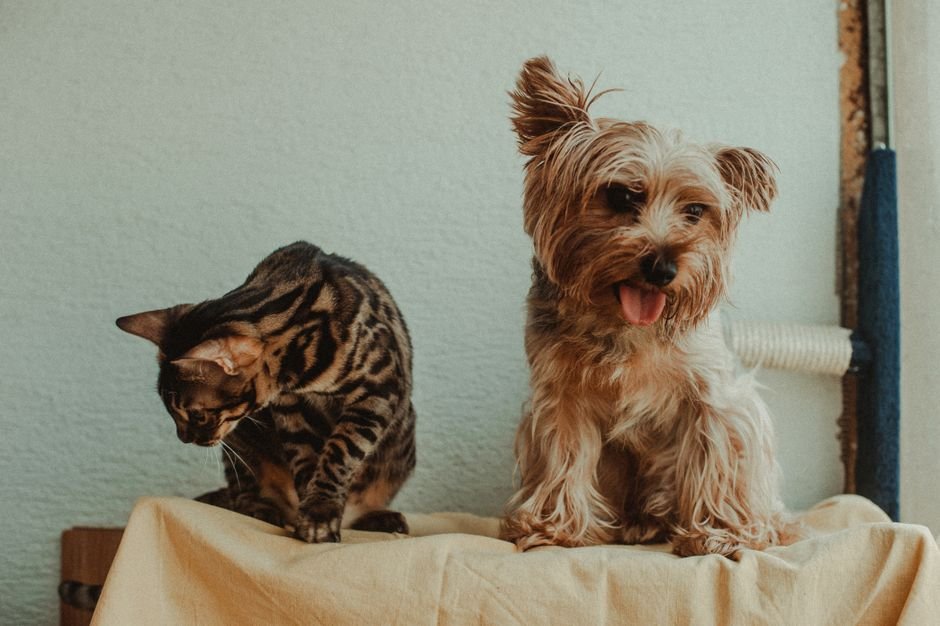
To dog-proof a litter box without odor, use elevation or cat-only access (a raised platform or a baby gate with a cat-sized gap) instead of sealed lids and cabinets that trap ammonia. Pair it with an open, uncovered box in a low-traffic, dog-free zone so your cat always has a clear escape route. This satisfies the dog, controls smell, and keeps your cat confident enough to keep using the box.
Key takeaways
- ✓The three goals of a cat-and-dog litter setup — block the dog, kill odour, keep the cat using it — actively work against each other, so single-pet advice usually breaks one to fix another.
- ✓Covered boxes and sealed cabinets are the most common dog-proofing fixes and the biggest cause of both trapped ammonia smell and stressed-out cats that boycott the box.
- ✓Elevation and cat-only access control beat enclosure: they keep the dog out while leaving the box open and airy.
- ✓A cat that suddenly avoids the box after a new dog arrives is usually reacting to being confronted or blocked, not to the litter itself.
- ✓Place enough open boxes (N+1) in dog-free zones with a clear exit, and scoop daily — airflow plus cleanliness does more for odour than any lid.
Why is dog-proofing the litter box so tricky in a cat-and-dog home?
If you share your home with both a cat and a dog, you already know the litter box is a magnet for trouble. Dogs raid it because, to their nose, cat waste smells a lot like cat food. So the obvious move is to close the box off — a hood, a covered cabinet, a tucked-away closet. Problem solved, right?
Not quite. In a dual-pet household, you’re actually juggling three goals at the same time, and they pull in opposite directions: (1) keep the dog out, (2) control the odour, and (3) keep your cat comfortable enough to keep using the box. Most advice online optimises just one of these — and quietly makes the other two worse.
Here’s the trap in plain terms. The exact fixes people reach for to beat the dog — lids, enclosures, sealed cabinets — trap ammonia inside a small space. Cats hate that smell, and a hooded box with a single exit can leave an anxious cat feeling cornered. The result is a box that’s technically dog-proof but produces worse odour and, eventually, a cat that stops using it altogether. That’s the puzzle this guide actually solves.
Choose elevation and access control over enclosure
The single most important shift is this: dog-proof by changing access, not by sealing the box. Dogs are drawn in by strong scent, and most lids or barriers fail over time — a determined dog learns to nose them open. Elevation and cat-only access work with your cat’s natural abilities instead of trapping her.
Elevation is the cleanest option. Cats jump; most dogs (especially larger ones) don’t. Putting an open box on a sturdy, cat-height surface — a wide shelf, a low dresser top, a purpose-built platform — keeps the dog physically out while the box itself stays completely open and ventilated. No trapped ammonia, no single-exit anxiety.
Access control is the other winner. A baby gate with a cat-sized gap at the bottom, or a pet door sized for the cat but not the dog, lets your cat slip into a dog-free zone to do her business in peace. This is also the setup that solves the behaviour problem, because your cat never has to worry about being ambushed mid-squat. For more on where these zones go, see our companion guide on where to put the litter box when you have a dog.
If you love the idea of a hidden or enclosed box for aesthetics, you can still make it work — but only with real airflow. Avoid tight closets and sealed cabinets with no ventilation, because trapped air concentrates odour and then releases it all at once when the door opens. If you use furniture-style enclosures, add ventilation gaps, keep at least two openings so your cat has an escape route, and never bury the box somewhere she has to cross the dog’s path to reach.
Think of it this way: a box can be out of the dog’s reach without being sealed shut. That distinction is the whole game.
How do I keep the litter box from smelling once it’s dog-proofed?
Once you’ve stopped sealing odour in, controlling it becomes straightforward. Airflow is your friend, not your enemy — an open box in a well-ventilated, dog-free corner smells dramatically better than a covered box in a closed cabinet, because ammonia never gets a chance to build up.
Scooping frequency matters more than any gadget. Daily scooping (twice daily if you can) removes the source before it turns into a smell. Pair that with a full litter change on a regular schedule and a box that’s the right size — cramped boxes get dirty faster and drive avoidance.
Keep the litter itself simple and unscented where possible; heavy fragrances often bother cats more than they help humans. If you want tech to lighten the load, an automatic box or a smart monitor can help — we cover the genuinely useful options in the smart pet tech that actually helps in a multi-pet home. And because odour in a two-animal house isn’t only about the box, our broader guide on keeping a home clean with both a cat and a dog tackles the rest.
When the fix backfires: your cat stops using the box
This is the scenario that catches people off guard. You dog-proof the box, and within days your cat starts going somewhere else. It feels like she’s protesting the change — and in a sense, she is.
The most common culprit isn’t the litter or the location; it’s a feeling of being trapped or ambushed. A hood blocks her sightlines and leaves only one way out, so an already-nervous cat won’t commit to it. And if a dog has ever confronted or chased her while she was in the box, she’ll start avoiding it entirely to avoid the confrontation.
New-dog arrivals amplify all of this. If you’ve recently added a dog, your cat needs guaranteed access to her box, food, and water without ever crossing paths with the dog — and she needs that access to continue long after introductions are over. Baby gates that open dog-free areas to the cat are the practical answer. Keep her routine predictable, keep food in its usual spot, and stop the dog from chasing her. The same principle applies at the food bowl, which is why our guide on where to put the cat’s food so the dog can’t get it pairs so neatly with this one.
Should I use a covered box at all?
A covered box isn’t automatically wrong — but in a cat-and-dog home it’s rarely the right first move. Covers are chosen to control smell and hide the box from the dog, yet they do the opposite of what an uneasy cat needs. They concentrate odour and remove escape routes at exactly the moment a cat feels most vulnerable.
If your cat is confident, the box is large, and you keep it scrupulously clean, a covered box with two exits and good ventilation can work. But if your cat is timid, senior, large, or newly sharing space with a dog, start open and elevated. You can always add structure later; it’s much harder to win back a cat who has decided the box is a threat.
When in doubt, favour the setup your cat votes for. A box she reliably uses beats the tidiest-looking enclosure she avoids.
The all-in-one setup checklist for a dog-proof, low-odour, cat-approved box
- Go open and elevated first: an uncovered box on a cat-height surface the dog can’t reach.
- Or use access control: a baby gate with a cat-sized gap, or a cat-only pet door into a dog-free room.
- Follow N+1: provide one more open box than the number of cats, spread across dog-free zones.
- Give every box a clear line of sight and at least two escape routes — never a single-exit hood in a corner.
- Never seal a box in a tight closet or airtight cabinet; if you enclose it, add ventilation and two openings.
- Scoop at least once daily and do full changes on a set schedule to stop odour at the source.
- Skip heavy fragrances; unscented litter is usually better tolerated by cats.
- After a new dog arrives, guarantee the cat a route to the box that never crosses the dog’s path.
- Stop the dog from chasing or confronting the cat near the box, and keep the cat’s routine predictable.
Quick troubleshooting decision tree
- Dog still getting in? Raise the box higher or tighten access control — swap a lid for elevation or a cat-only gap the dog can’t fit through.
- Smell got worse after dog-proofing? You’ve trapped air. Remove the cover, move the box out of the sealed cabinet, or add ventilation and scoop more often.
- Cat suddenly avoiding the box? Check for a single-exit hood, a spot the dog can corner her, or a recent chase. Open the box up, add an escape route, and separate the animals during litter time.
- All three at once? Reset to the basics: open box, elevated or gated, in a calm dog-free zone, scooped daily.
Frequently asked questions
How do I keep my dog out of the litter box without it smelling?
Use elevation or cat-only access instead of sealed lids and cabinets. An open box on a cat-height surface, or one behind a baby gate with a cat-sized gap, keeps the dog out while staying ventilated. Airflow plus daily scooping controls odour far better than trapping the box in an enclosure.
Why did my cat stop using the litter box after we got a dog?
Cats usually stop because they feel ambushed or trapped, not because of the litter. If a dog has confronted or chased her near the box, she’ll avoid it to avoid conflict. Give her a dog-free route to an open box with a clear escape, keep her routine predictable, and prevent the dog from chasing her.
Are covered litter boxes bad in a cat-and-dog home?
They’re often counterproductive. Covers trap ammonia and leave a single exit, which makes odour worse and can make an anxious cat feel cornered enough to quit the box. Start with an open, elevated box; only consider a cover if your cat is confident and you can provide two exits plus ventilation.
How many litter boxes do I need with a cat and a dog?
Follow the N+1 rule: one more box than the number of cats. Place them in low-traffic, dog-free zones the cat can reach without crossing the dog’s path. Multiple accessible boxes reduce stress-based avoidance and keep any single box from getting dirty and smelly too quickly.
Will an automatic litter box solve the dog problem?
It can help with odour and scooping, but it isn’t automatically dog-proof — a determined dog may still investigate it. Combine any automatic box with elevation or access control, and make sure the design has an open enough entry that your cat isn’t scared off by noise or a single exit.
For more setups that keep both pets happy, explore our full Litter & Odour guide.
Sources and further reading
Follow cleaning-product labels and keep pets away during use and from residues. See ASPCA: poisonous household products.
Filtration complements source control and particle filters do not remove every gas. See US EPA: air cleaners and air filters in the home.
The physical environment and opportunities for natural behaviour matter for cat welfare. See FelineVMA: meeting the needs of indoor cats.
These references provide background for the guidance above; they do not establish product testing or endorsement of a particular home layout. For individual health concerns, ask your veterinarian.

Better homes for cats, dogs, and the people who love both.