Robot Vacuum for Cats and Dogs: No-Go Zones, Litter Scatter, and Hair Tangles Explained
What every single-pet buying guide leaves out when a robot vacuum has to serve a litter box, two feeding stations, and a dog crate under one roof.
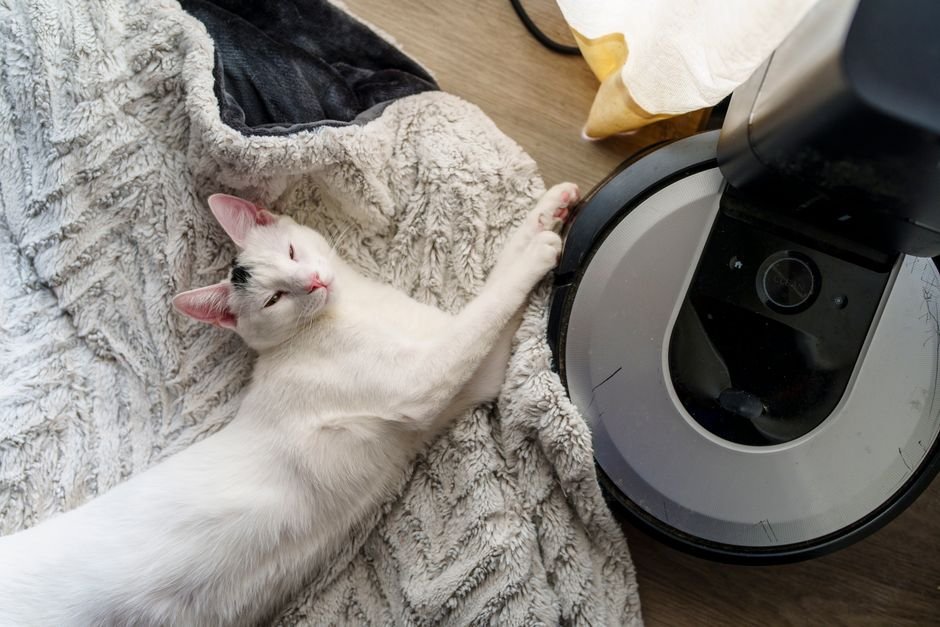
Yes, a robot vacuum can work well in a home with both a cat and a dog, but only if you set it up differently than a single-pet guide recommends. That means mapping the litter box with a wide buffer zone, blocking off food, water, and crate areas separately, choosing a combination brush roll that handles both fine litter grit and long dog fur, and tightening your maintenance schedule since two debris types clog machines faster than one.
Key takeaways
- ✓Multi-pet homes need zone-based mapping, not just a schedule, because the litter box, dog crate, and two feeding stations each need their own rules.
- ✓A combination rubber-and-bristle brush roll clears litter grit and wound-up dog fur far better than a single-material roller.
- ✓No-go zones should cover a 2-3 foot buffer around the litter box, not just the box itself, since scatter travels further than most owners assume.
- ✓Dogs that chase, bark at, or chew the robot need a short desensitization period before you ever let it run unsupervised.
- ✓Weekly brush roll and filter checks matter more here than in a single-pet home, since litter dust and fur combine to clog machines faster.
Why Single-Pet Robot Vacuum Advice Falls Short in a Cat-and-Dog Home
Search for a robot vacuum recommendation and you’ll land in one of two silos: guides built for cat litter, or guides built for pet hair. Neither one accounts for a floor plan where both problems happen in the same rooms, often at the same time. If you’re managing daily cleaning routines for a cat and a dog together, that gap shows up fast — the advice about self-empty bases assumes only fur, and the advice about litter-safe brush rolls assumes no dog is dragging mud, kibble, or fur into the mix.
The compounding problem is real, not theoretical. Litter granules are abrasive and get ground into a dog’s shed coat wherever the two paths cross, which means the debris your robot picks up isn’t clean fur or clean litter — it’s a sticky, gritty combination that wraps brush rolls tighter and clogs filters faster. A robot vacuum built for one species will often just relocate the mess rather than collect it.
Can One Robot Vacuum Really Handle Both Litter Scatter and Dog Hair?
Mostly, yes — but it needs more suction power and a smarter brush design than either single-pet guide typically recommends. Litter granules are heavier and denser than fur, so a robot tuned only for hair pickup will often skate over stray litter instead of lifting it, especially on hard flooring near the box.
The bigger risk is the robot becoming a litter delivery system rather than a cleanup tool. If it drives through a scatter zone before its brush roll has fully cleared, it can drag grains further into carpeted rooms or under furniture. Understanding your specific litter track pattern first — covered in our piece on tracked litter as a two-pet problem — makes it much easier to decide where the robot should never even drive.
How Do You Set No-Go Zones for a Litter Box, Bowls, and a Crate?
Start by mapping a buffer, not a box outline. Most owners restrict only the litter box footprint, but scattered granules routinely land two to three feet away, so your no-go zone needs to extend well past the box itself. The same logic applies to food and water — a robot bumping a bowl at 2 a.m. is a fast way to end up with kibble and water across the floor instead of in it.
Your dog’s crate needs its own zone too, separate from the litter box zone. Crates often have loose bedding, cords, or chew toys nearby that a robot can snag, tip, or drag. Most current robot vacuum apps let you draw multiple independent zones on one map, which is exactly the setup a mixed-pet home needs; if you’re building out a broader automated cleaning and monitoring setup, our smart pet tech guide covers how these zones interact with other devices like cameras and feeders.
Save every zone before the robot’s first unsupervised run. Retrofitting boundaries after litter has already been dragged across the living room is a much harder cleanup than setting the zone up front.
Which Brush Roll and Suction Settings Work Best for Two Coat Types?
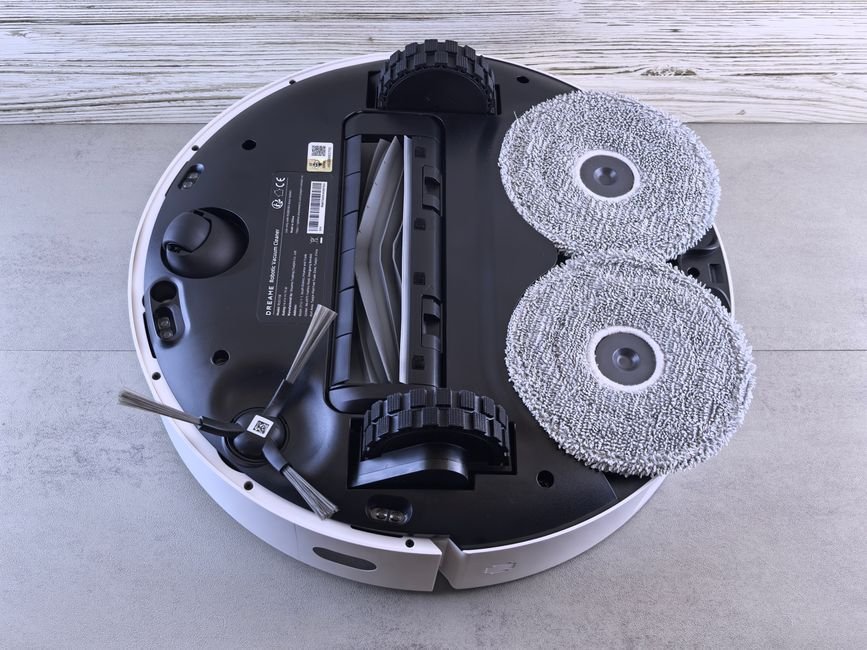
A pure bristle brush tends to grab long dog fur and wind it tight around the roller, while a pure rubber brush can let fine cat fur and litter dust slip past without lifting it. A combination roller — rubber fins paired with short bristles — handles both better than either design alone, and many mid-range robots now offer this as standard.
Suction strength matters more here than in a single-pet home because litter is denser than hair. Run your robot on a higher suction setting in rooms bordering the litter zone, and drop back to a standard setting in rooms that only see dog fur, if your model allows room-specific power settings. Skip mop-mode entirely in any zone bordering the litter box — wet pads can smear tracked litter into a paste instead of lifting it.
What If Your Dog Chases, Barks at, or Chews the Robot?
Cats typically either ignore a robot vacuum or supervise it from a nearby perch, but dogs are far more likely to treat it as a moving object worth chasing, barking at, or mouthing. Running the robot for the first few sessions while you’re home, on a low-power setting, gives most dogs time to lose interest before you trust it to run unsupervised.
If chasing continues past the first week, run the robot only in rooms your dog isn’t in, using a baby gate or the no-go zones you’ve already mapped, and expand its territory gradually. A robot vacuum that gets knocked over or chewed on isn’t just a broken appliance — it’s also a choking or battery-exposure risk you want to avoid entirely.
Building a Maintenance Routine That Keeps Up With Two Species
A single-pet household can usually get away with checking the brush roll every couple of weeks. A cat-and-dog home can’t — the combination of fine litter dust and long fur clogs brush bearings and filters noticeably faster, and a jammed brush roll near a litter zone will start pushing litter around instead of collecting it.
Build a short weekly habit around the brush roll, dustbin, and sensors rather than waiting for performance to drop. It takes under five minutes and prevents the slow decline where the robot quietly stops doing its job without any obvious sign until the floor looks worse, not better.
No-Go Zone Setup Checklist
- Map a 2-3 foot buffer around the litter box, not just the box’s physical footprint.
- Create a separate zone for each pet’s food and water station, even if the bowls sit close together — see our guide on getting both species to share a water source for placement ideas that also reduce splash.
- Add a no-go zone around the dog crate, especially where cords, bedding fringe, or chew toys collect.
- Block off any low shelf or basket holding the litter scoop, spare litter, or cleaning supplies.
- Save every zone in the app before the first scheduled run, not after the first mishap.
Weekly Robot Vacuum Maintenance Checklist
- Remove and rinse the brush roll, cutting away any wound fur before it reaches the bearings.
- Empty the dustbin even with a self-empty base in place, checking for damp litter clumping in the filter.
- Wipe down the side brushes, where fine litter dust tends to cake into a gritty film.
- Check the sensors and front bumper for litter residue that can cause misreads near the box zone.
- Confirm all no-go zones are still active after any app update or fresh map scan.
Gear that makes this easier
One Roof Paws is reader-supported. If you buy through the links below we may earn a small commission at no extra cost to you. We only suggest gear that fits the advice on this page.
These links open Amazon US. Search cards show product types, not tested winners. Check dimensions, suitability, shipping and availability before buying.
Frequently asked questions
Do robot vacuums work well with cat litter boxes?
They can, but only as a supplement to daily scooping, not a replacement for it. A robot vacuum with strong suction and a combination brush roll will pick up loose granules that stray outside the box, but it won’t clean the box itself and shouldn’t be relied on as your only litter-scatter defense.
Will a robot vacuum scare my dog or cat?
Reactions vary widely by animal rather than by species alone, though cats more often observe from a distance while dogs are more likely to chase or bark. Running the robot on a low setting while you’re home for the first several sessions helps most pets adjust before you leave it running unsupervised.
How do I stop a robot vacuum from spreading litter instead of collecting it?
Place a litter-trapping mat directly outside the box so most granules never reach the floor the robot drives on, and set a wide no-go buffer around the box so the robot isn’t driving through fresh scatter before its brush roll can lift it. If tracking is a recurring issue in your home, our guide on tracked litter as a two-pet problem covers the underlying causes in more depth.
Can a robot vacuum replace daily litter box scooping?
No. A robot vacuum manages scattered granules on the surrounding floor, but it can’t scoop waste from inside the box itself, and leaving that task to the robot will quickly lead to odor and hygiene problems regardless of how good the vacuum is.
Should I buy a mopping robot vacuum if I have both a cat and a dog?
A mop function can be useful for tracked-in mud or drool in dog-only areas, but it’s best avoided in any zone bordering the litter box, since a wet mop pad can smear tracked litter into a paste rather than lifting it. Many owners simply disable mop mode for that specific zone while keeping it active elsewhere.
See our full Cleaning category guide for more multi-pet routines that actually hold up in a real cat-and-dog household.
Sources and further reading
Follow cleaning-product labels and keep pets away during use and from residues. See ASPCA: poisonous household products.
Filtration complements source control and particle filters do not remove every gas. See US EPA: air cleaners and air filters in the home.
These references provide background for the guidance above; they do not establish product testing or endorsement of a particular home layout. For individual health concerns, ask your veterinarian.

Better homes for cats, dogs, and the people who love both.