Keep the Dog Out of the Litter Box (Without Trapping the Cat): Smart Tech for the Litter Room
How to keep the dog out of the litter box using microchip room doors, dog-proof enclosures, and access-alert cameras—while your cat comes and goes stress-free.

To keep the dog out of the litter box without trapping the cat, use access control that reads the cat and ignores the dog: a microchip cat door on the litter-room door, a top-entry or dog-proof enclosure sized for the cat, or a baby gate with a cat-sized cutout. Pair it with a motion-alert camera so you know the instant the dog gets curious. The goal is a barrier the cat clears effortlessly but the dog can’t.
Key takeaways
- ✓The core problem in a cat-and-dog home is two-sided: block the dog and keep the cat’s access easy—solve only one and the setup fails.
- ✓Microchip cat doors on a litter-room door are the most reliable smart barrier because they open only for your cat’s chip.
- ✓Top-entry and dog-proof enclosures work best for small-to-medium dogs and confident cats; nervous cats may need an open exit.
- ✓A motion-alert pet camera turns a silent problem into an early warning and shows you whether your fix is actually working.
- ✓Tech works best layered with placement and litter hygiene—no gadget replaces a well-located, clean box.
Why is keeping the dog out of the litter box so hard in a two-pet home?
If you own both a cat and a dog, you already know the litter box is the second front in the access war—right after the food bowl. The dynamic is the same one you fight at feeding time: two animals of very different sizes and appetites sharing one home, with one of them extremely motivated to reach something the other one needs private access to.
The trap most single-species guides fall into is treating this as a one-sided problem. “Just put the box up high” or “buy a covered box” blocks the dog—but it can also block, stress, or scare off the cat, and a cat who won’t use the box is a much bigger problem than a dog who raids it. Cats are picky about entry, exit sightlines, and feeling cornered.
So the real brief is narrow and specific: build a barrier your cat clears without a second thought, that a larger, determined dog simply cannot get through. That’s exactly the kind of asymmetric access problem smart pet tech was built to solve. If you want the non-tech fundamentals first, our companion guide on keeping your dog out of the litter box and keeping it odour-free covers placement and cleaning routines that make any tech work better.
What smart tech actually keeps the dog out while letting the cat in?
There are three categories worth your money, and they solve slightly different versions of the problem. You’ll often combine two of them.
The first is the microchip cat door—the same technology used for microchip feeders, repurposed onto the door of whatever room or closet holds the litter box. It reads your cat’s existing microchip (or an RFID collar tag) and unlocks only for her. The dog can headbutt it all day and it stays shut. This is the gold standard because it’s truly selective: no size guessing, no gaps a persistent dog can exploit.
The second is the physical dog-proof enclosure—top-entry boxes, cabinet-style furniture with cat-sized openings, or enclosures with baffled entrances. These rely on geometry: an opening the cat fits through and the dog doesn’t. They’re cheaper and need no batteries, but they only work reliably when there’s a clear size gap between your pets. A small terrier can defeat a box meant to stop a Labrador.
The third is the alert layer: a motion-triggered pet camera pointed at the litter area. It won’t physically stop anything, but it tells you the moment the dog investigates, lets you interrupt the behaviour, and—crucially—shows you whether your barrier is actually holding when you’re not home. We break down more of these devices in our roundup of smart pet tech that actually helps in a multi-pet home.
Setting up a microchip door on the litter room
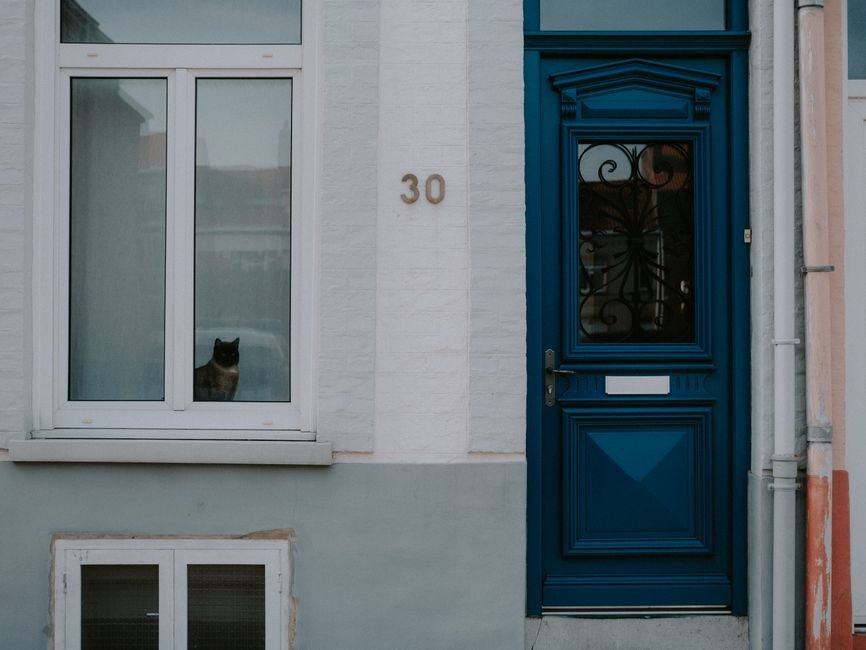
If you have a spare room, closet, laundry, or bathroom you can dedicate to the litter box, a microchip cat door installed in the door (or in a wall cutout) is the cleanest long-term fix. Mount it low enough that your cat steps through comfortably—most cats prefer an opening they don’t have to leap into—and register only the cat’s chip so the door never opens for the dog.
Give the door a few days of positive association: prop it open at first, lead the cat through with treats, then switch to chip-only mode. Cats adapt quickly when they learn the reward (their private bathroom) is on the other side. Keep the box well away from the flap so a nervous cat isn’t doing her business right next to a moving door.
This setup pairs naturally with your feeding strategy, because it’s the same access-control principle you may already use at mealtimes. If you haven’t tackled the food side yet, the same logic in our guide to feeding a cat and dog in the same house without food theft will feel instantly familiar. For a full walk-through of gate and door options specifically for litter access, see our detailed piece on dog-proof litter box access control setups.
When an enclosure or gate beats a microchip door
Not every home has a spare door to convert, and not every budget stretches to a microchip flap. In those cases, geometry-based barriers earn their keep—provided your pets differ enough in size.
A top-entry litter box asks the cat to hop up and drop in, which most medium and large dogs can’t manage and won’t bother with. A cabinet-style enclosure with a side opening works similarly. For a doorway, a baby gate with a small pet-door cutout, or a gate propped a few inches off the floor so the cat slips underneath, blocks a big dog while leaving a cat-sized gap.
Match the tool to your dog. A big, low-motivation dog is easy to gate out; a small, determined one that can wriggle through gaps or leap onto surfaces needs the selectivity of a microchip door instead. Confident cats handle top-entry boxes well, but a senior cat with stiff joints or a skittish cat who wants a clear escape route may refuse them—watch for accidents outside the box as your signal to switch approaches. Our guide to dog-proofing the litter box without odour digs into keeping these enclosures fresh.
Where you put the box still matters more than any gadget
Tech is a multiplier, not a substitute. The single biggest lever is location: a litter area the dog rarely passes and the cat feels safe in solves half the problem before you spend a cent. Think low-traffic corners, elevated shelves the cat can reach but the dog can’t, and rooms with a natural door to gate.
Keep the box scrupulously clean, too. A big reason dogs raid litter boxes is that the contents are, to a dog, a snack—so frequent scooping directly reduces the temptation. If your dog is specifically eating the waste, that’s worth addressing head-on with our guide on why dogs eat cat poop and how to stop it safely, and think through the room layout using our tips on where to put the litter box when you have a dog.
Layer these fundamentals under your chosen tech and the whole system becomes near bulletproof: good placement reduces the dog’s opportunities, cleanliness reduces its motivation, and the microchip door or enclosure catches whatever’s left.
Your dog-proof litter setup checklist
- Pick the location first: low dog-traffic, calm, ideally a room with a door you can convert.
- Choose your barrier: microchip door for selective access, top-entry or cabinet enclosure if there’s a clear size gap.
- Register only the cat’s chip or RFID tag so the door never opens for the dog.
- Introduce the barrier gradually with treats before switching to chip-only or removing the prop.
- Add a motion-alert camera so you can see whether the fix holds when you’re out.
- Scoop daily to cut the dog’s motivation and keep the cat happy to keep using the box.
- Watch for accidents outside the box—your cat’s early warning that the setup stresses her.
Frequently asked questions
Will a microchip cat door really keep my dog out of the litter box?
Yes—because it opens only when it detects your cat’s specific microchip or RFID tag, a microchip door ignores the dog entirely regardless of the dog’s size or persistence. It’s the most selective option available and doesn’t rely on a size difference between your pets. Just place the litter box away from the door so a nervous cat isn’t unsettled by the flap moving.
What if my cat refuses to use a top-entry or enclosed litter box?
Some cats—especially seniors or timid ones—dislike climbing in or feeling they lack a clear escape route, and accidents outside the box are the tell-tale sign. If that happens, switch to a barrier that keeps the box open and accessible for the cat while blocking the dog at the room level, such as a microchip room door or a gate with a cat-sized gap.
Do I need a pet camera if I already have a physical barrier?
You don’t strictly need one, but a motion-alert camera is the cheapest way to confirm your barrier actually works when you’re not home. It shows whether the dog is testing the setup and lets you catch problems early instead of discovering a raided box hours later. Think of it as quality control for the rest of your system.
Is this the same tech I’d use to stop food theft between my pets?
It’s the same underlying principle—selective, chip-based access—applied to a different room. Microchip feeders open a bowl only for the registered pet; a microchip room door does the same for the litter area. If you’ve solved food theft this way already, the litter setup will feel very familiar and reinforces the same habits for both animals.
How do I keep the litter room from smelling if it’s a closed-off space?
Scoop at least once a day, use a well-ventilated spot, and choose litter and cleaning products that are safe around both pets. Good airflow and frequent cleaning matter even more in an enclosed room, since odour builds faster in a smaller, closed space with less air exchange.
Ready to build a smarter, calmer home for both pets? Explore our full Smart Pet Tech category guide.
Sources and further reading
The physical environment and opportunities for natural behaviour matter for cat welfare. See FelineVMA: meeting the needs of indoor cats.
Check specific model instructions before relying on access control. See SureFeed microchip pet feeder specifications.
These references provide background for the guidance above; they do not establish product testing or endorsement of a particular home layout. For individual health concerns, ask your veterinarian.

Better homes for cats, dogs, and the people who love both.